KN95 Masks Kenya Guide – How to Choose the Right Respirator
Choosing the right KN95 mask in Kenya involves more than comparing appearance or price. Buyers should consider the workplace hazard, exact product specification, manufacturer, markings, fit and whether a disposable particulate respirator is suitable for the task.
This guide explains KN95 respirators, different mask designs, fit, standards, workplace applications, limitations and the checks procurement teams should make before approving a product.
KN95 Selection at a Glance
- Designed for suitable particulate hazards
- Close facial fit is important
- Check the exact manufacturer and model
- Verify product markings and available documentation
- Do not assume KN95 means NIOSH-approved N95
- Not designed for gases or chemical vapours
- Valved and non-valved designs serve different needs
Buying for a company?
Include the specification, quantity, delivery location and required date in your RFQ.
What Do You Need Help With?
Use the relevant route depending on whether you are learning about KN95 respirators, comparing products or preparing to purchase.
Compare KN95 Products
Browse foldable, valved, cup-style and other KN95 options currently listed by Bansi Safety Gear.
Browse KN95 MasksCompare N95 & KN95
Understand the differences between NIOSH-approved N95 respirators and KN95 respirators before specifying either one.
N95 vs KN95 GuideNeed Different Respiratory PPE?
If the hazard involves gases, vapours or another respiratory exposure, compare reusable respirators, filters and cartridges.
Respiratory ProtectionBrowse KN95 Masks Available in Kenya
Compare available KN95 respirators and open each product page to review its exact design, markings, product information and current price.
-
Dust Mask, KN95 Masks, Respiratory Protection
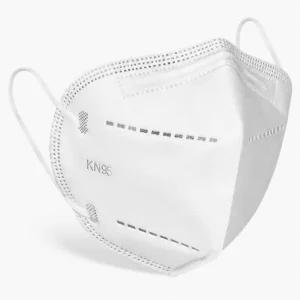
Foldable KN95 Mask – Non-Valved Particulate Respirator
Original price was: KSh 90.00.KSh 70.00Current price is: KSh 70.00. + VAT Order via WhatsApp -
Dust Mask, KN95 Masks, Respiratory Protection
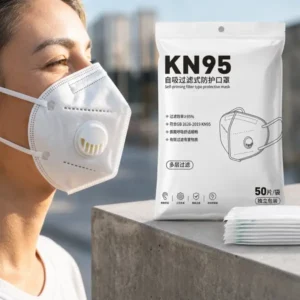
Valved KN95 Mask – Particulate Respirator
Original price was: KSh 100.00.KSh 80.00Current price is: KSh 80.00. + VAT Order via WhatsApp -
Dust Mask, KN95 Masks, Respiratory Protection
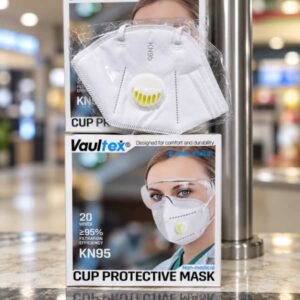
Vaultex KN95 Cup Protective Mask with Valve
Original price was: KSh 100.00.KSh 90.00Current price is: KSh 90.00. + VAT Order via WhatsApp

What Is a KN95 Mask?
A KN95 mask is a close-fitting filtering facepiece respirator intended for suitable airborne particulate hazards when the exact product meets the applicable specification and fits the wearer correctly.
Unlike a loose-fitting general face covering, a KN95 is designed to sit closely around the nose, cheeks and chin so inhaled air passes through the filtering material.
The term KN95 does not mean every KN95 product is technically identical. Manufacturer, model, markings, standard, construction and fit should all be checked.
Check Before Buying
- Manufacturer
- Exact model
- KN95 marking
- Applicable standard
- Product packaging
- Available manufacturer information
- Mask condition
- Intended workplace application
- Fit requirements
Types of KN95 Masks
KN95 respirators are available in different physical designs. The best design depends on fit, workplace requirements and wearer preference.
Foldable KN95 Masks
Foldable KN95 respirators remain compact during storage and expand into shape when worn. They are convenient for PPE kits, workplace distribution and transport.
Valved KN95 Masks
A valved KN95 includes an exhalation valve designed to make breathing out easier and help reduce heat or moisture buildup during suitable physical work.
Cup-Style KN95 Masks
Cup respirators use a preformed facepiece that maintains its shape around the nose and mouth rather than folding flat for storage.
Non-Valved KN95 Masks
Non-valved models have no dedicated exhalation valve and may be preferred where controlling exhaled air is important.
Valved vs Non-Valved KN95 Masks
Both designs may provide particulate respiratory protection when the exact mask meets the required specification and fits correctly.
The main difference is how exhaled air leaves the respirator.
Valved KN95
- Includes an exhalation valve
- Can reduce exhalation resistance
- May reduce heat buildup
- May improve comfort during physical work
A valved respirator should not automatically be selected where source control of exhaled air is required.
Non-Valved KN95
- No dedicated exhalation valve
- Simple filtering-facepiece design
- Available in foldable and other configurations
- May be preferred where exhaled-air control matters
What Are KN95 Masks Used For?
KN95 respirators are intended for suitable airborne particulate hazards. The actual contaminant and exposure level should be assessed before selecting one.
Construction Dust
Certain drilling, cutting, sanding, sweeping and maintenance activities can generate airborne particulates requiring respiratory protection.
Manufacturing
Production, packing, material transfer, maintenance and processing may create particulate exposures depending on the operation.
Workshops
Grinding, sanding, drilling, surface preparation and other workshop activities can generate airborne particles.
Warehouses
Dry-product handling, packaging materials, sweeping and maintenance may create dust requiring suitable respiratory protection.
Agriculture
Grain, feed, dry materials, harvesting and general farm activities can generate particulate exposure.
Cleaning & Maintenance
Certain dusty cleaning and maintenance tasks may require disposable particulate protection as part of a wider control programme.
KN95 Masks Are Not Suitable for Every Airborne Hazard
A KN95 filtering facepiece is designed for suitable particles. It should not automatically be selected for gases or chemical vapours.
Work involving solvents, certain paints, pesticides, acid gases, organic vapours or other gaseous contaminants may require a reusable respirator with the correct compatible cartridge.
Before Selecting Respiratory PPE
- Identify the airborne contaminant
- Determine whether it is a particle, gas or vapour
- Assess the exposure
- Determine the protection required
- Select the appropriate respirator
- Confirm filter or cartridge where applicable
- Confirm fit
Can KN95 Masks Be Used for Pesticide Spraying?
A KN95 should not automatically be selected for pesticide spraying. Agricultural chemicals can involve droplets, aerosols, vapours or combinations that require different respiratory protection.
Check the pesticide label, Safety Data Sheet, workplace exposure and the respiratory-protection requirement before selecting equipment.
Agricultural Respiratory Selection
Do not assume a particulate mask protects against pesticide vapours simply because the task involves spraying.
How Should a KN95 Mask Fit?
Filter performance alone is not enough. A KN95 should fit closely around the nose, cheeks and chin.
Large gaps can allow unfiltered air to bypass the filtering material.
Basic Fit Check
- Cover the nose and mouth
- Extend the mask beneath the chin
- Secure ear loops or straps
- Shape the nose area
- Check both cheeks
- Look for obvious gaps
- Confirm the mask remains secure during movement
Can Facial Hair Affect KN95 Fit?
Yes. Facial hair that crosses the sealing area can interfere with how closely a tight-fitting respirator sits against the face.
Beards, heavy stubble or sideburns crossing the seal can create leakage paths.
Fit Matters Because
A respirator can use high-performance filtering material but still provide inadequate protection if significant air leakage occurs around the face.
KN95 Standards & Product Markings
Procurement teams should verify the exact product rather than relying only on the letters KN95.
Manufacturer
Record the exact manufacturer where repeat purchasing or technical approval matters.
Model
Confirm the actual model being offered rather than approving a generic description.
Product Markings
Check markings on the respirator and packaging and make sure they correspond with the supplied product.
GB 2626-2019
Where a respirator is represented as conforming to GB 2626-2019, verify the exact marking and supporting manufacturer documentation.
Documentation
Where technical approval requires documentation, state that clearly in the RFQ.
Do Not Assume NIOSH Approval
KN95 is not itself a NIOSH approval designation. A product should only be described as NIOSH approved where that exact product carries the relevant approval.
KN95 vs Other Masks & Respirators
Products that look similar can serve very different purposes.
KN95 vs N95
Both are filtering facepiece respirators, but they belong to different standards or approval systems.
Read N95 vs KN95 ComparisonKN95 vs Surgical Mask
A KN95 is intended to fit closely to the face, while a typical surgical mask generally has a looser fit and a different purpose.
KN95 vs General Dust Mask
A basic disposable dust mask should not automatically be assumed to carry KN95 filtration performance or a KN95 classification.
KN95 vs Reusable Respirator
Reusable half-face and full-face respirators may accept different filters or cartridges for hazards that a KN95 is not designed to address.
Browse Respiratory ProtectionKN95 Masks Do Not Supply Oxygen
A KN95 is an air-purifying filtering facepiece. It does not supply breathing air.
Do not rely on a KN95 in oxygen-deficient, unknown or immediately dangerous atmospheres.
Specialist Assessment May Be Required For
- Unknown atmospheres
- Oxygen-deficient environments
- Unassessed confined spaces
- Immediately dangerous environments
When Should a KN95 Mask Be Replaced?
Follow the manufacturer's instructions for the exact respirator being used.
Avoid assuming one universal number of hours applies to every KN95 product and every workplace exposure.
Replace the Mask When It Becomes
- Wet
- Dirty
- Damaged
- Torn
- Contaminated
- Misshapen
- Difficult to breathe through
- Unable to maintain a suitable fit
How Much Do KN95 Masks Cost in Kenya?
KN95 pricing varies according to the manufacturer, exact model, specification, packaging, mask design and quantity ordered.
This guide does not hard-code a fixed selling price because products and availability can change.
Price Can Depend On
- Manufacturer
- Model
- Product specification
- Valved or non-valved design
- Packaging
- Quantity
- Documentation requirement
- Delivery destination
How Should Procurement Teams Specify KN95 Masks?
A clear technical specification reduces the risk of receiving a product that looks similar but does not match the requested requirement.
1. Product
State KN95 respirator or the exact approved manufacturer and model.
2. Standard
State the required technical standard or marking where mandatory.
3. Quantity
Specify pieces, packs, boxes or cartons required.
4. Documentation
State any manufacturer or technical documents needed for approval.
5. Packaging
Include pack-size or individual-packaging requirements where important.
6. Delivery
Provide delivery location and required date.
Bulk KN95 Masks for Companies in Kenya
Bansi Safety Gear supports KN95 requirements for companies, contractors, factories, workshops, institutions and project teams.
KN95 masks can also form part of a wider PPE requirement containing safety footwear, helmets, gloves, protective clothing, eye protection and other workplace safety items.
Include in Your RFQ
- Required quantity
- Brand or manufacturer if mandatory
- Model if specified
- Required standard
- Documentation requirement
- Packaging
- Delivery location
- Required date
KN95 Masks and Other PPE
Respiratory PPE often needs to work together with other protective equipment without interfering with fit.
Eye Protection
Safety goggles or glasses may be needed where airborne particles also create an eye hazard.
Safety GogglesConstruction PPE
Combine respiratory protection with helmets, footwear, gloves, reflective wear and other site-specific equipment.
Construction PPE KenyaComplete PPE Range
Browse other workplace protective equipment available from Bansi Safety Gear.
PPE Safety EquipmentContinue Your Respiratory Protection Research
Frequently Asked Questions About KN95 Masks
Common questions from individual buyers, workplace safety teams and procurement departments.
What is a KN95 mask?
A KN95 is a close-fitting filtering facepiece respirator intended for suitable particulate hazards when the exact product meets the required specification and fits correctly.
Are KN95 masks the same as N95 respirators?
No. They belong to different standards or approval systems and should not automatically be treated as identical product approvals.
Can KN95 masks be used for dust?
They may be suitable for certain particulate and dust hazards where the exact exposure and required protection support their use.
Do KN95 masks protect against chemical vapours?
No KN95 particulate respirator should automatically be selected for gases or chemical vapours. A suitable cartridge respirator may be required.
What is the difference between valved and non-valved KN95 masks?
A valved KN95 includes an exhalation valve that can improve exhalation comfort. A non-valved respirator has no dedicated valve.
What is the difference between foldable and cup KN95 masks?
Foldable masks can be stored flat and opened before use, while cup respirators use a preformed facepiece.
Can facial hair affect KN95 fit?
Yes. Facial hair crossing the sealing surface can interfere with the fit of a tight-fitting respirator.
When should a KN95 mask be replaced?
Follow the manufacturer's instructions and replace it when it becomes wet, dirty, damaged, contaminated, difficult to breathe through or unable to maintain fit.
Do KN95 masks supply oxygen?
No. KN95 filtering facepieces purify suitable particles from ambient air; they do not provide breathing oxygen.
Can KN95 masks be used for pesticide spraying?
Do not assume so. Pesticide respiratory protection should be selected using the chemical label, Safety Data Sheet and actual exposure.
What should companies check before buying KN95 masks?
Check manufacturer, model, markings, applicable standard, documentation, packaging, fit, quantity and intended workplace application.
Can companies buy KN95 masks in bulk?
Yes. Companies and institutions can submit their required quantity, specification, delivery location and required date for quotation.
Need Help Choosing or Buying KN95 Masks?
Browse available KN95 respirators, compare respiratory PPE or send your company requirement to Bansi Safety Gear for quotation.
Bansi Safety Gear — Gear Up. Stay Safe. Get It Done.