

Reflective Safety Overalls in Kenya – Buying & Selection Guide
Reflective safety overalls in Kenya are work garments that combine full-body workwear with reflective elements intended to make workers more noticeable under suitable lighting conditions.
They may be considered for construction sites, warehouses, logistics yards, roadwork, engineering, maintenance, utilities and other environments where employees operate around vehicles, machinery or reduced-light conditions.
However, reflective tape alone does not automatically make every overall certified high-visibility PPE.
The correct garment should be selected according to:
- Worker role
- Workplace visibility risk
- Working environment
- Reflective design
- Fabric
- Size and fit
- Required protective properties
- Applicable workplace standard
Looking to purchase rather than research? Browse Reflective Overalls in Kenya to compare available products, colours, sizes and current prices.
For plain and reflective workwear together, explore Work Overalls & Safety Coveralls Kenya.
What Are Reflective Safety Overalls?
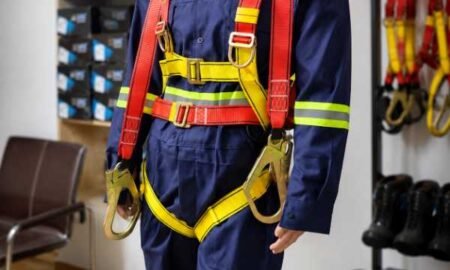
Reflective safety overalls are work overalls fitted with reflective material or tape intended to improve wearer noticeability when suitable light reaches the reflective areas.
Depending on the garment design, reflective elements may be positioned around areas such as:
- Torso
- Shoulders
- Arms
- Legs
The exact arrangement varies between products.
The main difference between an ordinary plain overall and a reflective overall is therefore the addition of a reflective visibility component.
That does not mean every reflective garment provides the same level of visibility or meets the same standard.
How Does Reflective Tape Work?
Reflective material is designed to return suitable incoming light toward its source.
For example, when vehicle headlights illuminate reflective tape, the reflective areas can make the wearer more noticeable than ordinary dark clothing under suitable conditions.
This can be particularly useful around:
- Moving vehicles
- Forklifts
- Loading equipment
- Road traffic
- Yard operations
- Outdoor night work
- Early-morning shifts
- Evening shifts
- Poorly illuminated work areas
Reflective clothing should still form part of a wider workplace-safety system.
It does not replace appropriate:
- Workplace lighting
- Traffic management
- Barriers
- Pedestrian routes
- Vehicle controls
- Training
- Supervision
- Other hazard-control measures
Reflective Overalls vs High-Visibility Overalls
These terms are often used interchangeably, but buyers should be careful.
Reflective Overall
A reflective overall contains reflective elements intended to make the wearer more noticeable under suitable lighting.
High-Visibility Overall
A high-visibility garment may need to meet particular requirements relating to:
- Background material
- Reflective material
- Garment design
- Minimum visible areas
- Performance
- Applicable standard
Therefore:
Reflective tape ≠ automatic high-visibility certification.
If your employer, contractor, tender or project requires a particular standard, check documentation for the exact garment before purchase.
Reflective Overalls vs Plain Overalls
Both are useful workwear options, but they serve different requirements.
Plain Work Overalls
Plain overalls may be suitable for general workplace clothing where enhanced worker visibility is not a primary requirement.
They may be considered for suitable:
- Workshops
- Factories
- Warehouses
- Maintenance
- Agriculture
- Engineering
- General industrial work
Browse Plain Overalls in Kenya for non-reflective workwear.
Reflective Safety Overalls
Reflective overalls add reflective elements intended to improve worker noticeability.
They may be more appropriate where workers operate:
- Near vehicles
- Around forklifts
- Around moving machinery
- In loading yards
- Along roads
- Outdoors during reduced-light conditions
- In locations where visibility is an identified workplace concern
The workplace risk assessment should determine which type is appropriate.
Reflective Overall vs Reflective Vest
A reflective overall and a reflective vest are also different products.
Reflective Overall
Provides:
- Full-body workwear
- Reflective detailing
- Clothing coverage
- Workplace uniform function
Reflective Vest
Is generally worn over existing clothing to add a visibility layer.
A reflective vest may be preferable where workers already have suitable clothing but require additional visibility.
Browse Reflective Vests to compare vest options.
The correct choice depends on the worker’s duties and workplace requirements.
Where Are Reflective Safety Overalls Used?
Reflective overalls can be considered across several industries.
Reflective Overalls for Construction
Construction sites may involve:
- Trucks
- Excavators
- Loaders
- Cranes
- Site vehicles
- Machinery
- Multiple work crews
Reflective workwear may help make suitable site personnel more noticeable where visibility is part of the PPE requirement.
Construction workers may also require:
- Safety helmets
- Safety boots
- Safety gloves
- Eye protection
- Respiratory protection
- Hearing protection
- Fall protection
For complete site PPE, explore Construction PPE Kenya.
Reflective Overalls for Roadwork
Workers carrying out road construction, maintenance or infrastructure work may operate close to:
- Traffic
- Construction vehicles
- Road machinery
- Heavy equipment
- Other work crews
Visibility can therefore be an important consideration.
The exact garment and required visibility classification should be determined by the applicable project or workplace requirements.
Do not select roadwork clothing based only on a bright colour.
Reflective Overalls for Warehouses & Logistics
Warehouse and distribution environments may involve:
- Forklifts
- Delivery vehicles
- Loading bays
- Dispatch areas
- Yard traffic
- Pallet movement
- Goods-handling equipment
Reflective overalls may be useful for selected employees working in areas where workers and vehicles interact.
For wider warehouse protection, visit Warehouse PPE Supplier in Nairobi.
Reflective Overalls for Manufacturing
Factories may use reflective workwear for selected:
- Maintenance technicians
- Engineering personnel
- Loading crews
- Stores teams
- Yard employees
- Technical workers
Not every factory worker automatically requires reflective clothing.
The need should be determined by:
- Work location
- Job role
- Vehicle exposure
- Lighting
- Machinery
- Workplace risk assessment
Reflective Overalls for Maintenance
Maintenance personnel may move between:
- Workshops
- Plant rooms
- Factory floors
- Warehouses
- Outdoor areas
- Equipment zones
- Vehicle routes
Reflective workwear can be useful where improved employee noticeability is required.
Reflective Overalls for Utilities
Utility teams may work:
- Outdoors
- Beside roads
- Around infrastructure
- Around equipment
- Near moving vehicles
- During changing lighting conditions
Reflective clothing may therefore form part of the required workwear.
Where electrical hazards are present, however, do not assume an ordinary reflective overall also provides electrical or arc protection.
Reflective Overalls for Engineering
Engineering environments may involve:
- Machinery
- Equipment installation
- Maintenance
- Vehicles
- Workshop operations
- Outdoor projects
Reflective workwear can be useful where enhanced visibility matches the worker’s role.
Specialist hazards should be assessed separately.
How to Choose Reflective Overalls
When buying reflective workwear, use a structured selection process.
1. Identify the Visibility Risk
Start with the workplace.
Ask whether employees operate:
- Around traffic
- Near forklifts
- Around moving equipment
- Outdoors at night
- During early or late shifts
- In poorly illuminated areas
- In loading zones
- In dispatch yards
If visibility is not a significant concern, plain workwear may be more appropriate.
2. Check Reflective Tape Placement
Different overalls may have reflective material positioned differently.
Check whether reflective tape appears around:
- Torso
- Arms
- Shoulders
- Legs
The design should match the intended workplace requirement.
Do not assume a small strip of reflective material gives a garment a particular high-visibility classification.
3. Check the Fabric
Reflective overalls may be manufactured using different fabrics.
Current product options may include materials such as:
- Cotton-based fabrics
- Poly-cotton
- Other industrial workwear fabrics
Fabric choice can affect:
- Comfort
- Breathability
- Weight
- Durability
- Working temperature
- Ease of movement
Check the individual product description rather than assuming every reflective overall uses the same fabric.
For cotton-focused workwear, view Cotton Reflective Overalls.
4. Choose the Correct Size
A reflective overall should allow normal workplace movement without becoming excessively tight or loose.
Consider:
- Chest measurement
- Waist measurement
- Hip measurement
- Sleeve length
- Leg length
- Worker height where relevant
- Clothing worn underneath
- Normal job movements
The worker should be able to:
- Walk
- Bend
- Reach
- Move the arms
- Perform normal work duties
without unnecessary restriction.
Excessively loose clothing can also be unsuitable around some machinery and equipment.
5. Check Closures & Pockets
Depending on the product, features may include:
- Front zipper
- Buttons
- Chest pockets
- Side pockets
- Utility pockets
- Cuffs
Choose garment features according to the actual work being performed.
6. Check the Garment Colour
Reflective overalls may be available in different colours.
Depending on current stock, options may include:
- Orange
- Navy blue
- Grey
- Red
- Khaki
- Other industrial colours
Colour can support:
- Company identity
- Department identification
- Worker-role differentiation
- Uniform consistency
- General noticeability
However:
Colour alone does not establish high-visibility certification.
The complete garment design and required documentation are more important.
7. Confirm Any Required Standard
Some employers, tenders, contractors or projects specify a particular clothing standard.
If this applies to your requirement, ask for documentation for the exact garment being supplied.
Never assume compliance based only on:
- Product colour
- Reflective tape
- Product name
- Marketing wording
Are All Reflective Overalls EN ISO 20471 Certified?
No.
A garment should not automatically be described as complying with EN ISO 20471 simply because it contains reflective material.
Where EN ISO 20471 or another recognised high-visibility requirement is specified, confirm documentation for the exact product before ordering.
This is particularly important for:
- Road projects
- Construction tenders
- Infrastructure works
- Utility projects
- Corporate procurement
- Government tenders
When submitting an RFQ, include the exact standard if one is required.
Do Reflective Overalls Protect Against Flame?
Not automatically.
Reflective tape and ordinary workwear fabric do not themselves establish flame-resistant performance.
Where workers face:
- Open flame
- Hot work
- Welding
- Significant heat
select protective clothing specifically designed and documented for those hazards.
Can Reflective Overalls Be Used for Welding?
Do not assume so.
Welding can expose workers to:
- Sparks
- Heat
- Molten material
- Hot surfaces
Ordinary reflective workwear should not automatically be treated as welding PPE.
Where welding protection is required, choose garments suitable for the actual welding process and expected exposure.
Are Reflective Overalls Chemical Resistant?
Not automatically.
Chemical resistance depends on:
- Chemical involved
- Concentration
- Exposure route
- Contact duration
- Garment material
- Garment design
- Required protection level
Workers handling hazardous chemicals should use clothing selected specifically for that exposure.
Are Reflective Overalls Arc Rated?
Not automatically.
Reflective tape or industrial workwear construction does not establish arc protection.
Electrical workers who require arc-rated clothing should select products with appropriate documented performance.
Are Reflective Overalls Waterproof?
Not necessarily.
Reflective workwear and rainwear are separate product categories.
An overall should only be described as waterproof or water resistant where the actual product specification confirms that property.
For wet-weather work, appropriate rainwear may be required separately.
Reflective Overall Colours
Colour-specific reflective workwear can also help organisations build consistent company uniforms.
Orange Reflective Overalls
Orange Reflective Overalls may suit suitable:
- Road projects
- Construction
- Infrastructure
- Outdoor site teams
The orange colour provides a bright background, while reflective tape adds visibility elements.
Navy Blue Reflective Overalls
Navy Blue Reflective Overalls may suit:
- Engineering
- Manufacturing
- Maintenance
- Warehousing
- Technical teams
They provide a more traditional professional industrial appearance.
Grey Reflective Overalls
Grey Reflective Overalls may suit:
- Workshops
- Manufacturing
- Maintenance
- Warehouses
- Engineering teams
Khaki Reflective Overalls
Khaki reflective workwear may be considered for:
- Field teams
- Utilities
- Agriculture
- Maintenance
- Construction
- Outdoor technical operations
Red Reflective Overalls
Red reflective workwear may suit:
- Technical departments
- Maintenance
- Engineering
- Department identification
- Industrial uniform programmes
Colour should always remain secondary to the garment’s actual required performance.
Reflective Overalls for Long Working Shifts
Employees may wear work overalls for several hours.
When selecting garments for extended use, consider:
- Correct size
- Fabric weight
- Breathability
- Working temperature
- Freedom of movement
- Clothing worn underneath
- Worker activity level
Avoid describing any garment as universally comfortable.
Comfort depends on:
- Worker body shape
- Size
- Climate
- Work intensity
- Fabric
- Garment design
How Should Reflective Overalls Fit?
The garment should allow the employee to perform normal job movements comfortably.
The worker should be able to:
- Bend
- Walk
- Reach
- Raise the arms
- Climb where appropriate
- Carry out normal work duties
without unnecessary restriction.
At the same time, excessively loose clothing may create problems around some equipment and machinery.
Select the size according to both body measurements and worker duties.
Reflective Overall Sizes
For company orders, avoid supplying only a total garment quantity.
Prepare a size schedule.
For example:
Small – 8 pieces
Medium – 20 pieces
Large – 35 pieces
XL – 25 pieces
XXL – 12 pieces
This makes it easier to:
- Confirm stock
- Prepare quotations
- Reduce sizing errors
- Issue uniforms correctly
Always confirm which sizes are available for the selected product.
How to Inspect Reflective Safety Overalls
Reusable reflective workwear should be checked regularly.
Inspect for:
- Torn fabric
- Open seams
- Broken closures
- Missing reflective tape
- Peeling reflective material
- Cracked reflective surfaces
- Heavy contamination
- Excessive wear
- Damage affecting fit
If reflective elements become heavily damaged or the garment is no longer appropriate for its intended task, replacement should be considered.
Caring for Reflective Overalls
Follow the care instructions supplied with the garment.
Poor cleaning or maintenance can affect both:
- Main garment fabric
- Reflective elements
General considerations include:
- Follow the garment care label
- Avoid unsuitable cleaning methods
- Inspect reflective tape after washing
- Allow garments to dry appropriately
- Store clean workwear correctly
- Replace badly damaged garments
Do not assume that every reflective overall has identical washing requirements.
Reflective Overalls for Company Teams
Companies may purchase reflective workwear for:
- Construction crews
- Warehouse employees
- Logistics personnel
- Engineering teams
- Maintenance departments
- Roadwork workers
- Yard teams
- Field personnel
- Utility workers
Before requesting a quotation, prepare:
- Garment type
- Preferred colour
- Required quantity
- Quantity by size
- Worker roles
- Workplace application
- Required visibility standard
- Branding requirement
- Delivery location
- Required date
For company requirements, use the PPE Quotation Service.
Company Branding & Reflective Overalls
Reflective workwear may also form part of a branded workforce uniform.
Depending on the product and order requirement, branding may include:
- Company logo
- Company name
- Department
- Employee identification
Branding should not unnecessarily cover:
- Reflective material
- Important garment markings
- Protective components
Confirm branding requirements before production or embroidery.
Reflective Overalls Price in Kenya
The price of reflective overalls in Kenya depends on the exact garment.
Factors can include:
- Fabric
- Garment construction
- Reflective tape arrangement
- Colour
- Size
- Additional features
- Specialist protective properties
- Brand
- Current availability
This guide should remain focused on selection and safety considerations, while the product category owns the shopping and live-pricing intent.
For current prices, browse Reflective Overalls in Kenya.
Individual product pages should show the latest WooCommerce price rather than hardcoding prices into this guide.
Complete PPE for Workers Wearing Reflective Overalls
Reflective workwear is normally only one part of a worker’s protective-equipment requirement.
Depending on the job, employees may also require:
- Safety Helmets
- Safety Boots
- Safety Gloves
- Reflective Vests
- Eye protection
- Respiratory protection
- Hearing protection
- Fall protection
The correct combination depends on the worker’s actual hazards.
Frequently Asked Questions
What are reflective safety overalls?
Reflective safety overalls are work garments incorporating reflective elements intended to make the wearer more noticeable under suitable lighting conditions.
Where are reflective overalls used?
They may be used in suitable construction, roadwork, logistics, warehousing, maintenance, engineering, utility and industrial environments where worker visibility is important.
What is the difference between plain and reflective overalls?
Plain overalls provide general workplace clothing without reflective detailing. Reflective overalls add reflective material intended to improve worker noticeability under suitable conditions.
Are reflective overalls the same as certified high-visibility clothing?
Not necessarily. A garment should only be described as meeting a particular high-visibility standard where appropriate documentation for the exact product confirms it.
Are all reflective overalls EN ISO 20471 certified?
No. Certification must be verified for the exact garment.
Does orange colour automatically make an overall high visibility?
No. Colour alone does not establish a particular high-visibility classification.
Are reflective overalls suitable for construction?
They may be appropriate where enhanced worker visibility forms part of the site’s PPE requirement.
Are reflective overalls suitable for warehouses?
They may be useful in suitable warehouses, yards and loading areas where workers operate around forklifts and vehicles.
Can reflective overalls be used for roadwork?
They may be suitable depending on the visibility requirements and required garment standard for the specific road project.
Are reflective overalls flame resistant?
Not automatically. Flame resistance requires appropriate garment construction and supporting documentation.
Can reflective overalls be used for welding?
Do not assume ordinary reflective workwear is welding PPE. Select clothing specifically appropriate for the welding hazard.
Are reflective overalls chemical resistant?
Not automatically. Chemical protection requires specialist garment selection according to the substance and exposure.
Are reflective overalls waterproof?
Not automatically. Waterproof performance should be confirmed from the exact product specification.
Are reflective overalls arc rated?
Not automatically. Arc protection requires appropriate documented garment performance.
How should reflective overalls fit?
They should allow normal work movements without being excessively tight or loose.
How do I choose the correct overall size?
Use the available product sizing information and consider body measurements, clothing worn underneath and normal worker movement.
How often should reflective overalls be inspected?
Inspect reusable workwear regularly and before use where appropriate. Look for torn fabric, damaged seams, broken closures and damaged reflective elements.
Can companies order reflective overalls in different colours?
Depending on current stock, companies may select different colours for departments, worker roles or uniform programmes.
Can company logos be added?
Branding may be available depending on the product and order requirement. Confirm before ordering and avoid interfering with reflective or protective components.
Can companies order mixed sizes?
Yes. Prepare a size breakdown showing the required quantity for each size.
Where can I check current reflective overall prices?
Browse the Reflective Overalls in Kenya category and individual product pages for current displayed prices.
Choosing the Right Reflective Safety Overall
The best reflective overall is not simply the brightest garment.
Select according to:
Visibility Risk → Worker Role → Workplace Environment → Reflective Design → Fabric → Fit → Required Protective Properties → Applicable Standard
Do not choose a garment only because:
- It is brightly coloured
- It contains reflective tape
- It is labelled “safety”
- Another company uses a similar garment
Start with the workplace requirement.
Then verify the exact product specification.
Once you know what your workers need, browse Reflective Overalls in Kenya to compare current products, colours, sizes and prices.
For plain and reflective workwear together, explore Work Overalls & Safety Coveralls Kenya.
For company quantities, tender requirements or workplace PPE lists, use the PPE Quotation Service.
Bansi Safety Gear — Gear Up. Stay Safe. Get It Done.




Leave a Reply