
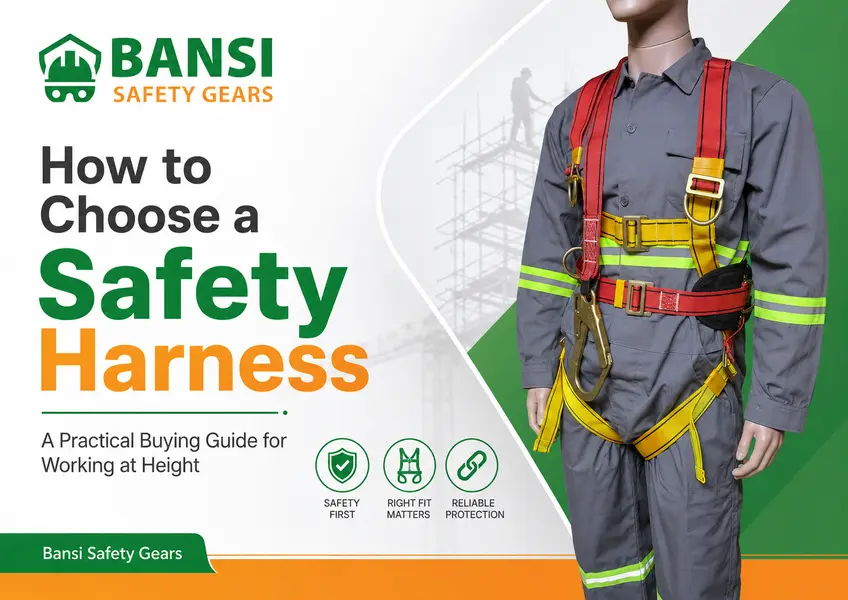
How to Choose a Safety Harness
Choosing the right safety harness is an important part of protecting workers who perform tasks at height. The correct harness depends on the work being carried out, the fall hazard, the connection system, worker movement and the other components forming part of the fall protection system.
A harness should not be selected only because it is inexpensive or readily available. It should be appropriate for the intended application and compatible with the lanyard, connectors, lifeline or anchorage arrangement being used.
If you are looking for products, start with our main Safety Harness in Kenya resource or browse the Safety Harnesses in Kenya category.
1. Start With the Work Being Performed
The first step when choosing a safety harness is identifying the actual task.
Different applications can involve very different movements and fall hazards.
Common applications include:
- Construction
- Roofing
- Scaffolding
- Tower climbing
- Electrical and pole work
- Industrial maintenance
- Warehouse maintenance
- Steel erection
- Solar installation
- Building maintenance
- Elevated platform work
A harness suitable for a maintenance technician working from an elevated platform may not necessarily be the most suitable configuration for a tower technician or scaffold worker.
2. Identify the Fall Hazard
Before choosing a harness, understand how and where a worker could fall.
Consider:
- Open edges
- Elevated platforms
- Roof edges
- Scaffold structures
- Towers
- Ladders
- Steelwork
- Elevated machinery
- Maintenance access areas
- Differences in working levels
The fall protection system should then be selected according to the identified hazard and work method.
3. Choose a Full Body Safety Harness
For many professional fall protection applications, a full body safety harness forms the foundation of the worker’s personal protection system.
A full body harness generally provides straps around the shoulders and legs together with appropriate adjustment and attachment components.
When choosing one, consider:
- Harness configuration
- Adjustment points
- Attachment points
- Webbing condition and construction
- Buckles
- D-rings
- Worker fit
- Compatibility with connecting equipment
Learn more from our Full Body Safety Harness Kenya guide.
4. Decide Between Single and Double Lanyards
One of the most common decisions is whether the work requires a single-lanyard or double-lanyard safety harness configuration.
Single Lanyard
A single-leg lanyard may be suitable where the work method allows the worker to remain connected to one appropriate connection point or system.
Explore our Single Lanyard Safety Harness Kenya page.
Double Lanyard
A double or twin-leg lanyard may be useful where the work method requires movement between suitable connection points.
It is commonly associated with applications such as:
- Scaffolding
- Structural work
- Tower work
- Industrial construction
- Elevated installation work
Explore our Double Lanyard Safety Harness Kenya page.
For a deeper comparison, read our Single vs Double Lanyard Safety Harness guide.
5. Consider Whether a Shock Absorber Is Required
Some fall arrest systems incorporate an energy-absorbing or shock-absorbing lanyard.
The energy absorber forms part of the complete fall arrest arrangement and should be compatible with the harness, connectors and anchorage system being used.
A harness with an energy-absorbing lanyard may be relevant for applications such as:
- Construction
- Scaffolding
- Roofing
- Tower work
- Industrial maintenance
- Structural work
Learn more from our Safety Harness with Shock Absorber Kenya guide.
6. Understand Fall Arrest Requirements
A fall arrest harness forms one part of a personal fall arrest system.
The complete arrangement can involve:
- Full body harness
- Lanyard
- Energy absorber
- Hooks or connectors
- Anchorage arrangement
- Lifeline
- Other compatible components
The harness should never be treated as the entire fall protection system by itself.
Explore our Fall Arrest Harness Kenya guide.
7. Choose the Correct Safety Harness Lanyard
The lanyard connects the harness to an appropriate part of the fall protection system.
Common options include:
- Single-leg lanyards
- Double or twin-leg lanyards
- Shock-absorbing lanyards
- Energy-absorbing lanyards
- Lanyards with suitable snap hooks
- Other compatible connecting arrangements
The correct option depends on worker movement, connection requirements and the complete fall protection system.
Read our Safety Harness Lanyards Kenya guide.
8. Consider the Worker’s Movement
Worker movement is one of the most important factors when selecting a harness and lanyard system.
Ask:
- Will the worker stay in one location?
- Will the worker move horizontally?
- Will they climb vertically?
- Will they transfer between connection points?
- Will they work from a platform?
- Will they climb a tower?
- Will they move across a roof?
- Will they work along structural steel?
Greater movement may require a different connecting arrangement from work performed from a fixed location.
9. Consider the Anchorage Arrangement
A safety harness must connect into an appropriate fall protection system.
The anchorage arrangement should be suitable for:
- The work environment
- The type of fall protection system
- The connecting equipment
- Worker movement
- The intended application
Harness selection should therefore be considered together with the connection and anchorage strategy.
10. Consider Safety Lifelines
Some working-at-height applications may incorporate vertical or horizontal lifeline systems.
Vertical Lifelines
These may be used for suitable vertical climbing applications such as:
- Towers
- Ladders
- Industrial structures
- Elevated access systems
Horizontal Lifelines
These may be used in suitable environments where workers need to move laterally across an elevated work area.
Examples include:
- Roofs
- Industrial structures
- Construction areas
- Elevated maintenance zones
Explore our Safety Lifeline Kenya guide.
11. Make Sure the Harness Fits Properly
A safety harness should be correctly fitted and adjusted to the individual worker according to the product manufacturer’s instructions.
When checking fit, pay attention to:
- Shoulder straps
- Chest strap
- Leg straps
- Buckles
- Adjustment points
- Attachment points
- Overall comfort and positioning
A poorly adjusted harness may not function as intended.
Workers should be trained in how to put on, adjust and inspect the specific harness they use.
12. Check the Harness Attachment Points
Different harnesses may have different attachment points depending on their design and intended applications.
Before purchasing, identify:
- Where the harness will connect
- Which D-rings or attachment points are intended for the selected system
- Whether the harness is compatible with the lanyard
- Whether additional positioning or climbing functions are needed
Always follow the manufacturer’s instructions for the specific harness.
13. Consider the Working Environment
The environment where the harness will be used can influence the best product choice.
Construction
Construction workers may require harness systems suitable for scaffolding, structural work and elevated installations.
Visit our Safety Harness for Construction Workers Kenya guide.
Roofing
Roof workers may need harnesses compatible with roof fall protection and lifeline arrangements.
Explore Safety Harness for Roofing Kenya.
Scaffolding
Scaffold workers may require a system that accommodates movement between suitable connection points.
Explore Safety Harness for Scaffolding Kenya.
Tower Climbing
Tower technicians may require more specialized harness and connecting arrangements.
Visit our Tower Climbing Safety Harness Kenya page.
Electrical & Pole Work
Electrical and utility technicians may require fall protection designed for pole, tower or elevated infrastructure work.
Read our Safety Harness for Electrical & Pole Work Kenya.
Industrial Maintenance
Factory and plant maintenance teams may require fall protection for elevated machinery, platforms and structures.
Explore Safety Harness for Industrial Maintenance Kenya.
Warehouses
Warehouse maintenance can involve elevated platforms, racking systems, roofs and lighting systems.
Visit our Safety Harness for Warehouse Work Kenya.
14. Inspect the Harness Before Use
Harness inspection should form part of the worker’s routine according to the manufacturer’s instructions and workplace procedures.
Common areas to inspect include:
- Webbing
- Stitching
- Shoulder straps
- Chest straps
- Leg straps
- D-rings
- Buckles
- Hooks
- Connectors
- Lanyards
- Energy absorbers
- Product labels
Also look for signs such as:
- Cuts
- Abrasion
- Burns
- Chemical damage
- Corrosion
- Deformation
- Excessive wear
Equipment that fails the required inspection criteria should not remain in normal service.
Read our detailed How to Inspect a Safety Harness guide.
15. Do Not Choose a Safety Harness Based Only on Price
Price is important, especially when purchasing safety harnesses in bulk, but it should not be the only purchasing factor.
Consider:
- Intended application
- Harness configuration
- Fit
- Lanyard requirements
- Connection points
- Compatibility
- Work environment
- Inspection requirements
- Product documentation
- Manufacturer instructions
A cheaper harness that does not suit the actual work environment is not necessarily the better purchasing decision.
Safety Harness Selection Checklist
Before purchasing a harness, ask:
- What work will the worker perform?
- What fall hazard is present?
- Is a full body harness required?
- Does the worker need a single or double lanyard?
- Is an energy absorber required?
- What connectors will be used?
- What anchorage arrangement will be used?
- Is a lifeline involved?
- Does the worker need vertical or horizontal movement?
- Does the harness fit the worker correctly?
- Is the harness compatible with the rest of the system?
- Can the equipment be inspected easily?
- Are manufacturer instructions available?
- Has the complete fall protection system been considered?
Common Safety Harness Applications
Safety harnesses may be used as part of properly selected systems for:
- Construction workers
- Roofers
- Scaffold workers
- Tower technicians
- Telecom installers
- Electricians
- Utility workers
- Maintenance technicians
- Factory maintenance teams
- Warehouse maintenance workers
- Solar installers
- Steel erection crews
- Building maintenance contractors
- Facilities management teams
Buy the Right Safety Harness in Kenya
Bansi Safety Gear supplies safety harnesses in Kenya for contractors, companies, technicians, maintenance teams and professional workers carrying out tasks at height.
Our harness ecosystem includes:
- Full Body Safety Harnesses
- Double Lanyard Safety Harnesses
- Single Lanyard Safety Harnesses
- Safety Harnesses with Shock Absorbers
- Fall Arrest Harnesses
- Safety Harness Lanyards
- Safety Lifelines
Browse our complete Safety Harnesses in Kenya category to compare available products.
For the complete hub covering harness types, applications and related fall protection equipment, visit Safety Harness in Kenya.
Bansi Safety Gear – Gear Up. Stay Safe. Get It Done.



Leave a Reply