
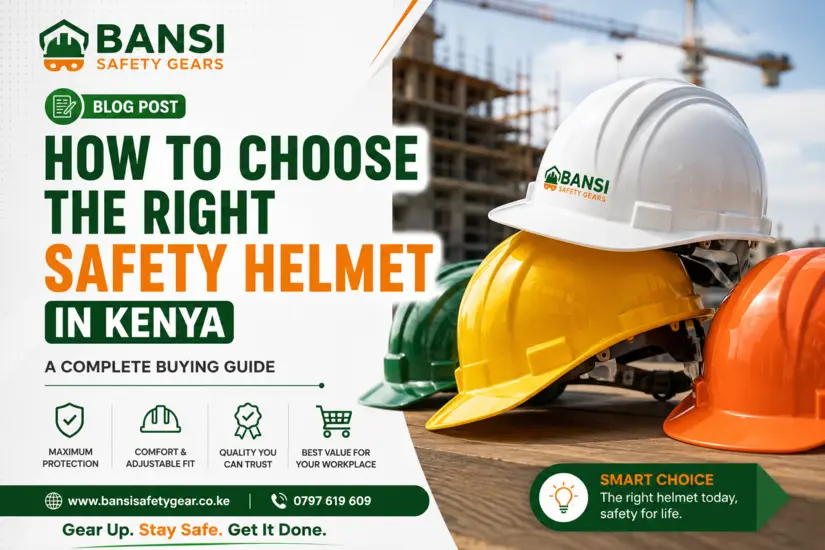
How to Choose the Right Safety Helmet in Kenya
Selecting the right safety helmet in Kenya is one of the most important decisions for protecting workers in construction, manufacturing, warehousing, engineering and other industrial environments. A properly selected helmet helps reduce the risk and severity of head injuries from falling objects, accidental impacts and overhead hazards while supporting workplace safety programmes.
However, not every safety helmet is suitable for every job. Factors such as the work environment, type of hazard, helmet design, suspension system and intended application should all be considered before making a purchase.
In this guide, we’ll explain how to choose the right safety helmet for your workplace, the different helmet types available and what to consider before buying.
Why Choosing the Right Safety Helmet Matters
Head injuries remain one of the most serious workplace hazards across many industries. Construction sites, factories, warehouses, utility projects and engineering works often expose workers to overhead risks that require suitable head protection.
Selecting the correct helmet helps employers:
- Improve workplace safety
- Support PPE compliance
- Protect employees from overhead hazards
- Reduce downtime caused by injuries
- Meet workplace safety requirements
- Improve worker confidence on site
A helmet should always be selected based on a workplace risk assessment and the manufacturer’s recommendations.
What Is a Safety Helmet?
A safety helmet, also known as a hard hat, is personal protective equipment (PPE) designed to help protect the wearer’s head from workplace hazards such as:
- Falling tools
- Falling construction materials
- Low overhead structures
- Flying debris
- Accidental impacts
Modern safety helmets consist of two main components:
- Outer shell – helps distribute impact forces.
- Internal suspension system – helps absorb and reduce transmitted impact energy while improving comfort.
Types of Safety Helmets
Different work environments require different helmet designs. Understanding the available options helps you choose the most suitable product.
Standard Safety Helmets
These are commonly used across construction, manufacturing, warehousing and engineering projects.
Ideal for:
- Construction
- Factories
- Warehouses
- Infrastructure projects
- General industrial work
Vented Safety Helmets
Vented helmets include ventilation openings that improve airflow, making them more comfortable in hot environments.
Suitable for:
- Outdoor construction
- Road projects
- Agriculture
- Manufacturing
- Warehouses
Learn more: Vented Safety Helmet Kenya
Non-Vented Safety Helmets
Non-vented helmets have a solid shell without ventilation openings.
These are commonly selected where a closed-shell design is preferred.
Learn more: Non-Vented Safety Helmet Kenya
Ratchet Safety Helmets
Ratchet helmets feature an adjustment wheel that allows quick sizing without removing the helmet.
Benefits include:
- Better comfort
- Faster adjustment
- Improved fit
- Easier daily use
Learn more: Ratchet Safety Helmet Kenya
Climbing Safety Helmets
These helmets include secure chin straps and enhanced retention systems designed for work at height.
Suitable for:
- Telecommunications
- Rope access
- Utility work
- Tower climbing
- Rescue operations
Learn more: Climbing Safety Helmet Kenya
Understanding Safety Helmet Colours
Many organisations use helmet colours to help identify different roles on site. While colour assignments vary between companies, common practices include:
| Helmet Colour | Common Users |
|---|---|
| White | Engineers, supervisors, managers, visitors |
| Yellow | General construction workers and labourers |
| Blue | Electricians, technicians and skilled trades |
| Green | Health & Safety Officers and first aid personnel |
| Red | Fire marshals and emergency response teams |
| Orange | Road construction crews, surveyors and utility workers |
Always follow your organisation’s own PPE colour-coding policy.
How to Choose the Right Suspension System
The suspension system is responsible for both comfort and impact management.
Ratchet Suspension
Advantages:
- Quick adjustment
- Comfortable fit
- Easy one-handed operation
- Excellent for long working hours
Ideal for:
- Daily industrial use
- Construction companies
- Large workforces
Pin-Lock Suspension
Advantages:
- Simple design
- Reliable adjustment
- Cost-effective
Suitable for workplaces where frequent adjustment is not required.
Vented vs Non-Vented Helmets
One of the most common purchasing questions is whether to choose a vented or non-vented helmet.
Choose a Vented Helmet if:
- Employees work outdoors
- Heat is a concern
- Comfort is a priority
- Long working hours are common
Choose a Non-Vented Helmet if:
- A closed-shell design is required
- The workplace risk assessment recommends it
- The manufacturer’s specifications indicate it is suitable for your application
Always confirm the helmet is appropriate for the hazards present in your workplace.
Consider Worker Comfort
Workers are more likely to wear PPE correctly when it is comfortable.
Look for helmets that offer:
- Lightweight construction
- Adjustable suspension
- Comfortable headband
- Balanced weight distribution
- Secure fit
Comfort supports consistent PPE use throughout the working day.
Check Compatibility with Other PPE
A safety helmet often needs to work alongside other protective equipment.
Depending on your workplace, consider compatibility with:
- Face shields
- Hearing protection
- Safety goggles
- Respirators
- Chin straps
- Neck protection
Always use accessories approved by the helmet manufacturer.
Inspect Before Every Use
Every safety helmet should be inspected before use.
Check for:
- Cracks
- Deep scratches
- UV damage
- Damaged suspension system
- Loose adjustment mechanism
- Missing components
- Evidence of previous impacts
If any damage is found, remove the helmet from service and replace it according to the manufacturer’s guidance.
Common Mistakes When Buying Safety Helmets
Avoid these common purchasing mistakes:
- Buying based only on price
- Choosing the wrong helmet type
- Ignoring workplace hazards
- Not considering worker comfort
- Overlooking suspension quality
- Failing to inspect helmets regularly
- Using damaged helmets
- Purchasing without checking certification and manufacturer specifications
Buying Safety Helmets in Bulk
For companies purchasing PPE for multiple employees, consider:
- Product quality
- Consistent sizing options
- Reliable supplier support
- Stock availability
- Fast delivery
- Technical product guidance
- RFQ and BOQ support
- After-sales service
Working with an experienced PPE supplier helps simplify procurement and ensures consistent supply.
Why Choose Bansi Safety Gear?
Bansi Safety Gear supplies quality safety helmets for businesses, contractors, institutions and industrial workplaces across Kenya.
We provide:
- Industrial safety helmets
- Vented and non-vented helmets
- Ratchet safety helmets
- Climbing safety helmets
- Multiple helmet colours
- Bulk procurement support
- RFQ and BOQ quotations
- Competitive pricing
- Nationwide delivery
Whether you need helmets for a small team or a large industrial project, our team can help you choose suitable head protection for your workplace.
Frequently Asked Questions
Which safety helmet is best for construction?
The best helmet depends on your workplace hazards, company requirements and the manufacturer’s specifications. Construction projects commonly use standard industrial safety helmets with adjustable suspension systems.
Should I choose a vented or non-vented helmet?
This depends on your work environment. Vented helmets improve airflow in hot conditions, while non-vented helmets provide a closed-shell design. Always select the option that matches your workplace risk assessment.
How often should a safety helmet be inspected?
Inspect your helmet before every use and replace it after a significant impact or if it shows signs of damage, following the manufacturer’s recommendations.
Can I paint or drill a safety helmet?
No. Modifying a helmet may affect its protective performance. Only use the helmet and accessories as approved by the manufacturer.
Does helmet colour indicate the level of protection?
No. Helmet colour is generally used for identification purposes and does not determine the helmet’s protective capability. Always verify the helmet’s certification and intended application.
Choose the Right Safety Helmet with Confidence
Selecting the right safety helmet in Kenya is about more than choosing a colour or style. The correct helmet should match your workplace hazards, provide a comfortable fit, comply with the manufacturer’s specifications and support your organisation’s PPE programme.
At Bansi Safety Gear, we supply a wide range of quality safety helmets for construction, manufacturing, engineering, warehousing, utilities and industrial workplaces across Kenya. Our team can assist with product selection, bulk procurement, RFQs and BOQs to help you find the right solution for your workforce.
Need help choosing the right safety helmet?
Contact Bansi Safety Gear today for expert advice, competitive pricing and nationwide delivery.
Phone/WhatsApp: 0797 619 609
Website: www.bansisafetygear.co.ke
Gear Up. Stay Safe. Get It Done.



Leave a Reply