
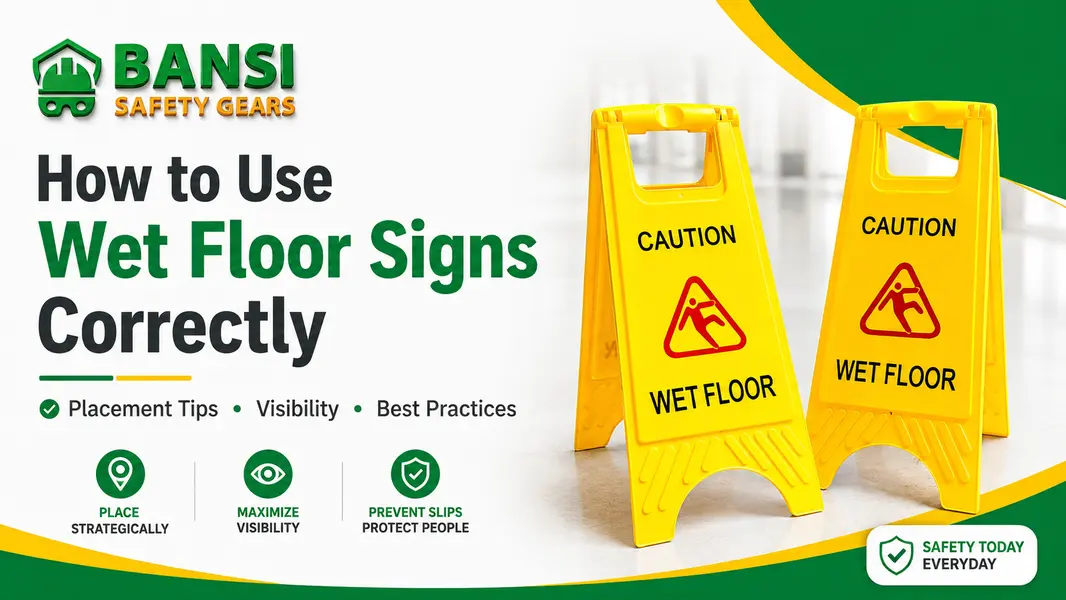
How to Use Wet Floor Signs Correctly
Wet Floor signs are among the most recognizable temporary workplace warning signs, but simply placing one somewhere near a wet surface does not automatically make the warning effective.
For a Wet Floor sign to be useful, the message should match the actual condition, the board should be visible to people approaching the affected area, and it should be used alongside appropriate cleaning, housekeeping and access-control measures where those are required.
This guide explains how to use Wet Floor signs correctly, where to position them, common mistakes to avoid and when another type of caution board may provide a more accurate warning.
If you are looking for the product itself, explore our Wet Floor Caution Board Kenya page or browse the complete Caution Boards in Kenya collection.
What Is a Wet Floor Sign?
A Wet Floor sign is a temporary warning board used to communicate that a floor or walking surface is currently wet.
Common situations can include:
- Floor mopping
- Washroom cleaning
- Corridor cleaning
- Lobby cleaning
- Floor washing
- Spill cleanup
- Routine housekeeping
- Commercial cleaning
Many Wet Floor signs use a portable folding A-frame design that can be positioned while the temporary condition exists and stored once the warning is no longer required.
The purpose of the sign is to communicate the condition.
It does not physically dry the floor or remove the underlying issue.
Why Is Correct Wet Floor Sign Placement Important?
A warning is most useful when people can see it before they reach the condition being communicated.
If the sign is hidden, positioned too far away, placed after the affected area or blocked by furniture, someone approaching may not receive useful advance warning.
Good placement therefore considers:
- Direction of pedestrian movement
- Entrances into the affected area
- Visibility
- Size and shape of the wet area
- Furniture and equipment
- Multiple approaches
- The duration of the temporary condition
1. Position the Sign Before the Wet Area
One of the most important principles is to position the Wet Floor sign where approaching people can see it before reaching the wet surface.
Avoid placing the sign only in the middle of the affected area if people have already walked onto the wet floor before they can read it.
Think about how people actually enter and move through the space.
For example, if a corridor has an entrance at both ends, warning visibility may need to be considered from both directions.
2. Consider Every Direction People Can Approach From
A common mistake is positioning a warning board for only one direction of travel.
Consider whether people can approach from:
- Multiple doors
- Opposite ends of a corridor
- Stairways
- Lift areas
- Reception areas
- Connecting rooms
- Side entrances
The appropriate positioning will depend on the layout.
There is no useful rule that one sign is automatically sufficient for every workplace.
3. Keep the Warning Clearly Visible
A Wet Floor caution board should not be unnecessarily hidden behind:
- Furniture
- Cleaning equipment
- Doors
- Trolleys
- Shelving
- Decorative items
- Other signs
The board should be positioned where people using the relevant route have a reasonable opportunity to notice it.
Highly visible warning colours and symbols help, but good placement remains important.
4. Use the Correct Warning Message
Not every cleaning activity requires the same caution board.
Use Wet Floor when:
The primary condition being communicated is a wet walking surface.
Use Cleaning in Progress when:
The main message is that cleaning or housekeeping activity is underway.
Use Work in Progress when:
The main issue is temporary maintenance, repairs, servicing or another work activity.
For cleaning-related warnings, see our Cleaning in Progress Caution Board Kenya page.
For maintenance and repair areas, see our Work in Progress Caution Board Kenya guide.
Using the most accurate wording makes the warning easier to understand.
5. Do Not Use the Sign as a Substitute for Cleaning Up
A Wet Floor sign is a warning tool.
It should not be used as an excuse to leave an avoidable wet condition unattended.
Where appropriate, workplaces should:
- Deal with spills
- Follow suitable cleaning procedures
- Dry or manage the affected area
- Restrict access where necessary
- Use appropriate housekeeping procedures
The warning sign supports these actions; it does not replace them.
6. Avoid Creating Another Obstruction
A portable caution board itself occupies floor space.
It should therefore be positioned thoughtfully.
Avoid placing the sign where it unnecessarily blocks:
- Doorways
- Narrow walkways
- Emergency routes
- Stair access
- Other important movement areas
The objective is to make the warning visible without creating an avoidable additional obstruction.
7. Move the Sign as the Cleaning Area Changes
Cleaning work is often mobile.
A cleaner may begin in one corridor, then move to a washroom, lobby or another room.
Where appropriate, the warning sign should move with the relevant temporary condition rather than being left behind in an area that is no longer affected.
Portable Folding Caution Boards are particularly useful for this reason.
8. Remove the Sign When the Warning Is No Longer Relevant
Temporary warning signs should reflect current conditions.
If a Wet Floor sign remains permanently in place, even when the floor is dry, people may begin to treat it as background rather than meaningful temporary information.
Once the condition has been addressed, the warning should be removed or updated as appropriate.
How Many Wet Floor Signs Should Be Used?
There is no single number that works for every space.
Consider:
- Size of the wet area
- Number of entrances
- Direction of pedestrian movement
- Visibility
- Building layout
- Furniture and visual obstructions
- Whether cleaning is moving between areas
A small room with one entrance presents a different situation from a large lobby accessible from several directions.
The objective is to ensure people approaching the relevant area can reasonably see the warning.
Wet Floor Sign Placement in Corridors
Corridors often have traffic moving in more than one direction.
Consider:
- Both ends of the corridor
- Side doors
- Intersections
- Stair or lift access
- Visibility around corners
A sign placed at only one end may not be visible to people approaching from another direction.
Wet Floor Signs in Hotels
Hotel housekeeping teams may use Wet Floor signs during appropriate cleaning in:
- Lobbies
- Corridors
- Washrooms
- Service areas
- Other managed spaces
The warning should be visible without unnecessarily obstructing guests or staff.
If the cleaning task itself rather than the wet surface is the main message, a Cleaning in Progress sign may sometimes be more appropriate.
Wet Floor Signs in Offices
Office cleaning may take place while employees and visitors continue moving through the building.
Possible areas include:
- Reception spaces
- Corridors
- Washrooms
- Kitchens
- Common areas
Consider entrances, pedestrian movement and whether cleaning occurs during occupied working hours.
Wet Floor Signs in Hospitals and Healthcare Facilities
Healthcare facility cleaning may involve specific procedures and access requirements.
Temporary Wet Floor signs can support warning communication where appropriate, but they should be used in line with facility procedures and should not be treated as a substitute for access control or other measures required by the site.
Wet Floor Signs in Schools
Schools and universities may use Wet Floor warning signs during suitable cleaning activities in corridors, washrooms, offices and other managed areas.
Placement should account for the number of approaches and the movement of students, staff and visitors through the area.
Wet Floor Signs in Shopping and Commercial Facilities
Public-facing facilities may have continuous pedestrian movement.
Temporary warnings should therefore be positioned with visibility and multiple directions of approach in mind.
Large or busy areas may require different positioning considerations from smaller controlled spaces.
Wet Floor Signs for Cleaning Companies
Professional cleaning contractors may work across many client locations.
Portable folding Wet Floor boards can be particularly practical because they can be:
- Carried between locations
- Positioned as cleaning begins
- Moved with the cleaning team
- Folded for transport
- Stored between assignments
Cleaning companies should also make sure that staff understand when a Wet Floor sign is appropriate and when another warning message should be used.
Wet Floor Sign vs Cleaning in Progress Sign
These signs are related but not identical.
Wet Floor describes the condition of the walking surface.
Cleaning in Progress describes the activity being performed.
If the floor is wet because it has just been mopped, Wet Floor may provide the more specific warning.
If cleaning is taking place but the floor is not wet, Cleaning in Progress may better represent the activity.
Wet Floor Sign vs Work in Progress Sign
A Wet Floor warning specifically describes a wet surface.
A Work in Progress sign is broader and may apply to:
- Maintenance
- Repairs
- Servicing
- Temporary facility work
See our Work in Progress Caution Board Kenya page if the temporary condition relates to maintenance rather than floor cleaning.
Common Wet Floor Sign Mistakes
Placing the sign after the wet area
The person may already have reached the condition before seeing the warning.
Hiding the sign behind cleaning equipment
A warning is less useful if it cannot be easily seen.
Ignoring another entrance
People may approach from directions the cleaner did not initially consider.
Using Wet Floor for every cleaning task
The message should match the actual condition.
Leaving the sign permanently
Temporary warnings should remain meaningful.
Assuming the sign removes responsibility for the wet surface
The floor condition should still be addressed appropriately.
Treating warning signage as the only control
Some situations may require barriers, restricted access or other measures.
Practical Wet Floor Sign Checklist
Before placing a Wet Floor caution board, ask:
- Is the floor actually wet?
- Is Wet Floor the most accurate message?
- Can people see the sign before reaching the area?
- Are there multiple entrances?
- Is the sign hidden by furniture or equipment?
- Does the board itself create an obstruction?
- Does the affected area require more than one warning position?
- Are stronger controls needed?
- Is the warning still relevant?
- Has the sign been removed when the condition is resolved?
Frequently Asked Questions
Where should a Wet Floor sign be placed?
Position it where people approaching the affected area have an opportunity to see the warning before reaching the wet surface.
How close should a Wet Floor sign be to the wet area?
There is no single distance appropriate for every environment. Positioning should consider visibility, pedestrian routes and the layout of the affected area.
Is one Wet Floor sign enough?
Not always. Multiple entrances or approaches may require additional placement considerations.
Should Wet Floor signs be used while mopping?
They may be useful where mopping creates a temporary wet walking surface that needs to be communicated.
Can a Wet Floor sign be used for spills?
It may support temporary warning communication during appropriate spill response, but the spill itself should also be addressed.
When should Wet Floor signs be removed?
When the temporary warning is no longer relevant and the condition has been addressed as appropriate.
Is a Wet Floor sign enough to make the area safe?
No. It communicates a warning but does not physically remove the wet condition.
Can I use Cleaning in Progress instead?
That depends on the message required. Cleaning in Progress describes an activity; Wet Floor specifically describes a wet walking surface.
Explore Wet Floor & Caution Boards
For product information, visit our Wet Floor Caution Board Kenya page.
For other warning messages, explore the complete Caution Boards in Kenya collection.
You can also explore:
Work in Progress Caution Board Kenya
Cleaning in Progress Caution Board Kenya
Using the correct warning board, positioning it thoughtfully and addressing the underlying condition are all important parts of effective temporary workplace communication.
Gear Up. Stay Safe. Get It Done.




Leave a Reply