
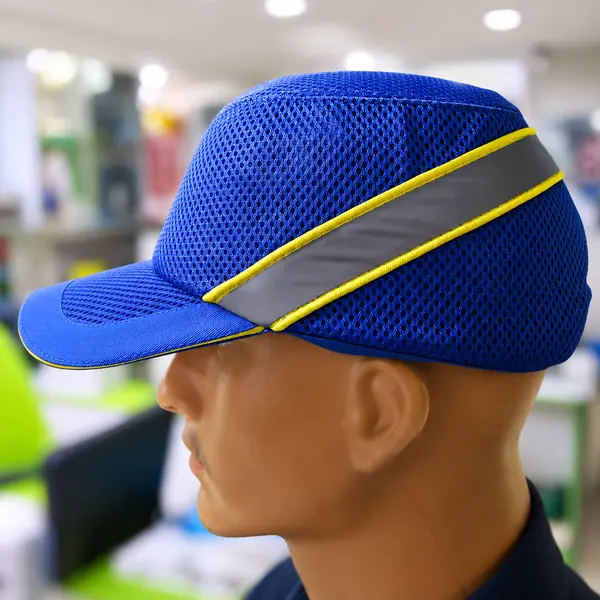
Bump Cap Size & Fit Guide
A bump cap should fit securely, comfortably and steadily on the wearer’s head without being excessively loose or uncomfortably tight.
Correct fit matters because a bump cap that moves around excessively, sits incorrectly or has a poorly positioned protective insert may not perform as intended during normal workplace movement.
This bump cap size and fit guide explains how to adjust a bump cap, what a correct fit should feel like, how to check the internal protective insert and what companies should consider when purchasing bump caps for several workers.
For available products, browse our Bump Caps in Kenya.
How Should a Bump Cap Fit?
A correctly fitted bump cap should:
- Sit securely on the head
- Remain reasonably stable when the worker bends or moves
- Have the protective insert correctly positioned
- Not slide excessively forward, backward or sideways
- Not create uncomfortable pressure points
- Allow the adjustment system to close securely
- Provide adequate comfort for the intended work activity
- Avoid unnecessarily obstructing the wearer’s vision
The exact fitting method varies between bump-cap models.
Always follow the instructions supplied with the specific product.
Why Bump Cap Fit Matters
A bump cap is protective equipment rather than an ordinary baseball cap.
Although many bump caps have a familiar cap-style outer design, they normally include an internal protective shell or insert.
This protective component needs to sit correctly on the worker’s head.
A cap that is too loose may move excessively during activities such as:
- Bending
- Walking
- Entering or leaving vehicles
- Working underneath equipment
- Inspecting machinery
- Moving through low-clearance areas
A cap that is excessively tight may become uncomfortable, particularly when worn for extended periods.
The aim is therefore a secure and comfortable fit appropriate to the exact bump-cap model.
Does a Bump Cap Come in Different Sizes?
Bump-cap sizing depends on the manufacturer and model.
Some products are supplied in adjustable size ranges, while other designs may use different sizing systems.
Do not assume that every bump cap has the same head-size range.
Before purchasing, check the exact product specification for information such as:
- Head-size range
- Adjustment mechanism
- Closure type
- Peak length
- Internal shell design
- Product dimensions
For businesses purchasing for several employees, adjustable bump caps can make workforce distribution easier, but the stated adjustment range still needs to suit the people who will actually wear the product.
How to Measure Your Head for a Bump Cap
Where a manufacturer provides sizing based on head circumference, measure around the part of the head where the bump cap will naturally sit.
Use a flexible measuring tape and keep it level around the head.
The measurement should be comfortably close to the head rather than pulled excessively tight.
Then compare the measurement with the sizing information supplied for the exact bump-cap model.
Do not rely only on descriptions such as:
One size
or
Adjustable
These descriptions do not necessarily mean the product will fit every worker.
How to Adjust a Bump Cap Correctly
The exact adjustment mechanism varies by product.
Some bump caps use:
- Hook-and-loop adjustment
- Strap adjustment
- Buckle systems
- Sliding adjustment
- Other manufacturer-specific systems
Use the adjustment provided on the exact product.
Step 1: Inspect the Bump Cap
Before fitting it, check that the cap and protective insert appear to be in good condition.
Look for obvious damage to:
- Internal shell
- Outer fabric
- Adjustment system
- Seams
- Peak
- Ventilation areas
- Other fitted components
Do not continue using visibly damaged protective equipment without following the manufacturer’s inspection and replacement guidance.
Step 2: Loosen the Adjustment
Open or loosen the rear adjustment sufficiently to place the bump cap comfortably on the head.
Do not force a tight cap onto the wearer.
Step 3: Position the Cap Correctly
Place the bump cap squarely on the head.
Check that the internal protective insert is correctly positioned rather than twisted, folded or displaced.
Step 4: Tighten the Adjustment
Gradually tighten the adjustment until the cap sits securely.
It should remain stable without causing excessive pressure.
Step 5: Check Stability
Move the head naturally.
Look:
- Up
- Down
- Left
- Right
Then bend forward as the worker might during normal work.
The cap should remain reasonably stable.
Step 6: Check Comfort
The wearer should not experience excessive pressure on:
- Forehead
- Temples
- Back of the head
- Top of the head
If the product cannot be adjusted to provide both security and reasonable comfort, another size or model may be required.
How Tight Should a Bump Cap Be?
A bump cap should be snug rather than painfully tight.
It should not move freely around the head during ordinary movement.
At the same time, excessive tightening can create discomfort and pressure points.
A practical fit check is to adjust the cap and then perform the normal movements expected during the job.
If the cap repeatedly slides out of position, it may be too loose.
If the wearer experiences excessive pressure or discomfort, it may be too tight or unsuitable for their head shape.
Where Should a Bump Cap Sit on the Head?
The cap should normally sit squarely and securely on the wearer’s head according to the product design.
Avoid deliberately wearing it:
- Excessively tilted backward
- Far forward over the eyes
- Sideways
- With the protective insert incorrectly seated
- In a position not intended by the manufacturer
The protective insert is the critical protective component.
Its position should not be altered merely to make the outer cap look different.
Should the Peak Face Forward?
Use the product according to the manufacturer’s intended configuration.
Many baseball-style bump caps are designed to be worn with the peak facing forward.
Do not reverse or modify protective headwear unless the manufacturer specifically permits that configuration.
Peak length can also affect usability.
Workers operating in very tight spaces may prefer a shorter-peak model where an appropriate product is available.
Short-Peak vs Standard-Peak Bump Caps
Bump caps may be available with different peak lengths.
Standard Peak
A conventional peak can provide the familiar appearance of a normal baseball cap and may suit many general workplace applications.
Short Peak
A shorter peak may improve upward visibility in certain low-clearance or confined environments.
Neither option should be selected solely on appearance.
Consider:
- Worker visibility
- Work position
- Clearance
- Protective insert
- Fit
- Workplace hazard
- Exact product specification
What If the Bump Cap Keeps Falling Off?
If a bump cap repeatedly moves or falls off during ordinary work, check:
- Whether the adjustment is correctly tightened
- Whether the adjustment system is damaged
- Whether the stated size range suits the worker
- Whether the protective insert is correctly installed
- Whether the cap has been altered
- Whether the product is appropriate for the work activity
Do not solve a poor-fitting product by making unofficial modifications.
If the cap cannot be fitted securely according to the manufacturer’s instructions, consider another suitable model or size.
What If the Bump Cap Feels Too Tight?
First check the adjustment system.
If possible, loosen it slightly while maintaining a secure fit.
If discomfort continues even within the proper adjustment range, the model may not suit that wearer’s head dimensions or shape.
PPE should not simply be issued and assumed to fit everyone.
For company purchases, allowing workers to check fit before standardising a large order can help identify potential sizing problems.
Bump Cap Fit for Workers With Different Head Sizes
A company purchasing bump caps for many workers should not assume that one model will automatically fit the entire workforce.
Consider:
- Manufacturer size range
- Adjustment range
- Different worker head sizes
- Comfort during long shifts
- Peak design
- Ventilation
- Workplace activity
Where practical, test the intended model on a representative group before placing a very large order.
The objective is not just to issue PPE.
The equipment should be suitable and wearable for the people expected to use it.
Adjustable Bump Caps
Adjustable bump caps are useful because the fit can be tailored within the manufacturer’s stated size range.
Depending on the model, adjustment may use a strap, hook-and-loop fastening or another mechanism.
Check that the adjustment:
- Moves correctly
- Locks or holds its position
- Is not damaged
- Does not loosen unexpectedly during normal movement
A damaged adjustment system can affect the stability of the bump cap.
Bump Cap Fit for Warehouse Workers
Warehouse workers frequently:
- Bend
- Reach
- Walk between racking
- Enter vehicles
- Handle stock
- Move through low-clearance areas
A bump cap used for suitable warehouse hazards should remain stable during these normal activities.
Remember, however, that a bump cap is not automatically suitable for every warehouse hazard.
Where workers are exposed to falling objects or helmet-level risks, suitable Safety Helmets in Kenya may be required instead.
Bump Cap Fit for Maintenance Workers
Maintenance workers may frequently change posture while working around:
- Machinery
- Pipework
- Cabinets
- Plant equipment
- Building services
- Low structures
This makes stability particularly important.
The worker should check that the cap remains reasonably secure when bending, looking upward or moving around equipment.
Bump Cap Fit for Automotive Workers
Automotive technicians may work:
- Under vehicles
- Inside vehicles
- Around lifts
- Beneath equipment
- In restricted workshop spaces
A suitable bump cap should not constantly move out of position as the worker changes posture.
Peak length may also be worth considering where upward visibility is important.
Can You Wear a Bump Cap With Safety Glasses?
Many bump caps may be compatible with common workplace eye protection, but compatibility should be checked with the exact products being used.
When fitting a bump cap together with other PPE, ensure that one item does not significantly interfere with another.
Check compatibility with items such as:
- Safety glasses
- Goggles
- Earplugs
- Respiratory protection
- Other required PPE
Do not modify the bump cap simply to accommodate another product.
Can You Wear Ear Defenders With a Bump Cap?
Compatibility depends on the exact bump cap and hearing-protection system.
Some combinations may work well, while others may interfere with correct positioning.
Where hearing protection is required, assess the products together rather than selecting each item independently.
For more general head-protection options, browse Head Protection Equipment in Kenya.
Check the Protective Insert
A bump cap’s internal protective insert is an important part of the product.
Before use, check that it is:
- Present
- Correctly seated
- Not visibly cracked
- Not badly deformed
- Not incorrectly modified
- Properly positioned inside the outer cap
Do not wear the outer fabric cap without the protective insert where the product is designed to use one.
Likewise, do not modify the protective shell to improve comfort or appearance.
Inspect the Adjustment System
A good fit depends partly on the condition of the adjustment mechanism.
Check for:
- Broken fasteners
- Damaged straps
- Worn hook-and-loop material
- Missing components
- Adjustment that no longer holds
- Excessive stretching or deformation
If the adjustment cannot maintain the intended fit, follow the manufacturer’s instructions regarding repair or replacement.
Common Bump Cap Fitting Mistakes
Wearing the Cap Too Loose
A loose cap may move excessively during normal work.
Overtightening
Excessive tightening can create unnecessary discomfort and pressure.
Ignoring the Protective Insert
A good-looking outer cap is not enough. The internal protective component should also be correctly positioned and in good condition.
Assuming One Size Fits Everyone
Workers have different head sizes and shapes.
Modifying the Cap
Cutting, drilling, reshaping or otherwise modifying protective equipment can affect its intended performance.
Using the Wrong Type of Head Protection
Perfect fit does not make a bump cap suitable for falling-object hazards.
Read Bump Cap vs Safety Helmet if you are unsure which type of protection is appropriate.
Fit Does Not Change the Protection Level
A correctly fitted bump cap is still a bump cap.
Good fit does not turn it into an industrial safety helmet.
Bump caps are intended for suitable hazards involving accidental contact with hard, stationary objects.
Where falling-object or other helmet-level hazards exist, use properly specified head protection.
For the standards distinction, read EN 812 vs EN 397.
EN 812 and Bump Cap Fit
Where an EN 812 bump cap is required, confirm the standard for the exact product model.
Correct fit remains important, but adjustment alone does not prove that a product complies with EN 812.
Verify:
- Product marking
- Exact model
- Manufacturer information
- Relevant documentation where required
For more standards guidance, visit PPE Certification & Safety Standards Kenya.
Buying Bump Caps for a Company
When purchasing bump caps for several employees, consider more than price.
Your requirement should include:
- Intended workplace use
- Required standard where applicable
- Approximate workforce size
- Size or adjustment requirements
- Preferred peak design
- Ventilation requirements
- Colour requirements
- Quantity
- Delivery location
It may be useful to evaluate a suitable model before standardising it across a large workforce.
For available products, browse Bump Caps in Kenya.
For pricing guidance, see Bump Cap Price in Kenya.
Frequently Asked Questions
How should a bump cap fit?
A bump cap should sit securely and comfortably on the head, remain reasonably stable during normal movement and have its protective insert correctly positioned.
Should a bump cap be tight?
It should be snug enough to remain stable but should not be tightened to the point of excessive pressure or discomfort.
Are bump caps one size fits all?
Not necessarily. Many products are adjustable, but the exact head-size range depends on the model and manufacturer.
How do I know my bump cap size?
Measure your head circumference where the product will naturally sit and compare it with the manufacturer’s sizing information for the exact model.
Can I loosen a bump cap if it feels uncomfortable?
Use the product’s adjustment mechanism within its intended range. The fit should remain secure after adjustment.
What should I do if my bump cap keeps sliding?
Check the adjustment system, size range, protective insert and product condition. If it cannot be adjusted securely, consider another suitable model.
Should the bump cap move when I bend down?
A small amount of movement may occur depending on the design, but it should not repeatedly slide off or move excessively during normal work activities.
Can I wear a bump cap backwards?
Only use a protective product in configurations permitted by the manufacturer.
Can I remove the protective insert?
Do not remove the protective insert while using the product as protective headwear unless the manufacturer’s instructions specifically provide for removal during cleaning or maintenance.
Do I need different bump-cap sizes for employees?
Possibly. Some adjustable models cover a range of sizes, but employers should confirm that the selected model actually fits the intended workforce.
Does a good-fitting bump cap replace a safety helmet?
No. Correct fit does not change the type or level of protection provided by the product.
Choose a Bump Cap That Fits the Worker and the Hazard
A good bump-cap fit should be:
Secure → Stable → Comfortable → Correctly Adjusted → Suitable for the Hazard
Start by selecting the correct type of head protection.
Then check the exact size range, fit, adjustment system and product condition.
Browse Bump Caps in Kenya for



Leave a Reply