
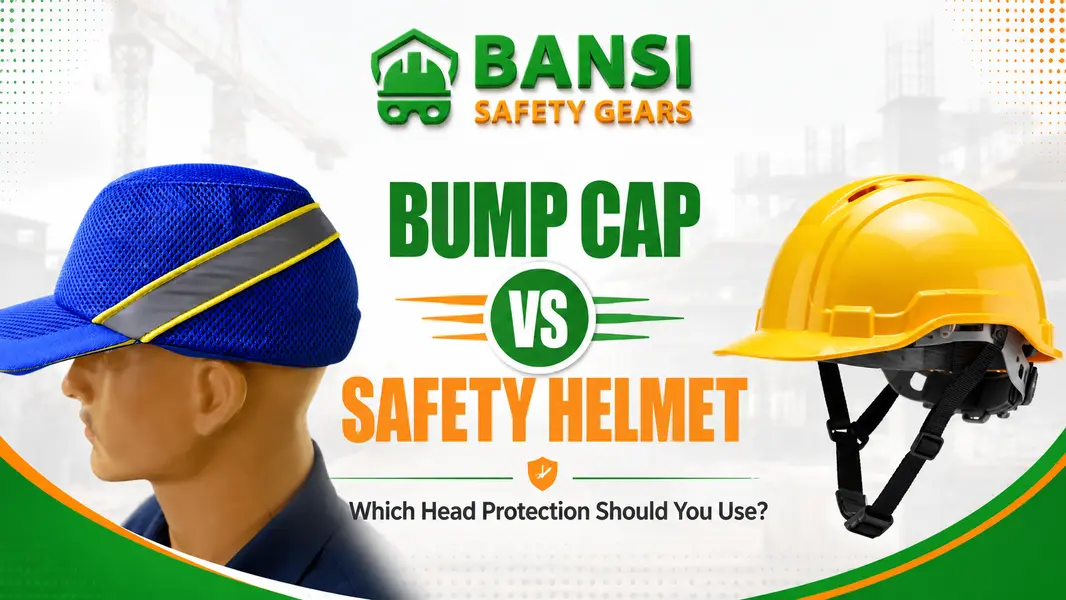
Bump Cap vs Safety Helmet
Choosing between a bump cap and a safety helmet depends on the workplace hazard.
Both provide head protection, but they are designed for different risk conditions.
A bump cap may be appropriate where a worker could accidentally strike their head against a fixed or stationary object.
A safety helmet may be required where hazards include falling objects, overhead materials or other workplace risks requiring helmet-level protection.
The simplest way to decide is:
Fixed-object contact hazard → consider a suitable bump cap
Falling-object or higher-level head hazard → consider a properly specified safety helmet
Always confirm the exact workplace risk and product specification before purchasing.
Browse our Bump Caps in Kenya or Safety Helmets in Kenya to compare current products.
What Is a Bump Cap?
A bump cap is lightweight protective headwear intended for suitable environments where workers may accidentally strike their heads against fixed objects.
Examples can include:
- Shelving
- Low beams
- Pipework
- Machinery housings
- Vehicle interiors
- Fixed workplace structures
- Low-clearance areas
Many bump caps use a cap-style outer design with a protective internal insert.
Depending on the model, features may include:
- Mesh ventilation
- Adjustable fitting
- Reflective detailing
- Short or standard peaks
- Lightweight construction
A bump cap should not automatically be treated as a hard hat or industrial safety helmet.
What Is a Safety Helmet?
A safety helmet, often called a hard hat, is protective headwear intended for workplace hazards requiring a different level or type of head protection.
Depending on the exact helmet and specification, it may be used where workers face hazards such as:
- Falling objects
- Overhead materials
- Suspended items
- Construction activities
- Industrial operations
- Work beneath elevated activities
- Other identified workplace head hazards
The exact helmet should always match the particular hazard and required specification.
Browse Safety Helmets in Kenya for current helmet options.
Bump Cap vs Safety Helmet: Main Difference
The main difference is what type of hazard the product is intended to address.
Bump Cap
May be suitable where the main risk is accidental contact with:
- Shelves
- Fixed beams
- Pipework
- Machinery
- Equipment housings
- Vehicle structures
- Low fixed objects
Safety Helmet
May be required where hazards include:
- Falling tools
- Falling materials
- Suspended objects
- Overhead work
- Construction activities
- More significant workplace head-impact hazards
Do not choose a bump cap merely because it is lighter, cheaper or more comfortable.
Protection requirements come first.
Bump Cap vs Hard Hat
The terms hard hat and safety helmet are commonly used for industrial protective headwear.
A bump cap is different.
A bump cap is generally intended for suitable fixed-object contact hazards.
A hard hat or safety helmet may be required where the worker needs protection from falling objects or other higher-level head hazards.
If your workplace requires a hard hat, use an appropriately specified helmet rather than substituting a bump cap.
Can a Bump Cap Replace a Safety Helmet?
No, not where safety-helmet protection is required.
A worker should not substitute a bump cap simply because it is:
- Lighter
- Smaller
- Better ventilated
- More comfortable
- Easier to wear
- More similar to an ordinary cap
Comfort matters, but only after the correct protection type has been identified.
The workplace risk assessment should determine whether bump-cap or helmet-level protection is appropriate.
When Should You Wear a Bump Cap?
A bump cap may be suitable where workers operate around fixed structures and the primary risk is accidental contact with those objects.
Potential examples include:
- Warehouse shelving
- Low beams
- Maintenance pipework
- Automotive interiors
- Workshop machinery
- Inspection spaces
- Technical rooms
- Low ceilings
- Fixed equipment
For current products and pricing, browse Bump Caps in Kenya or read our Bump Cap Price in Kenya guide.
When Should You Wear a Safety Helmet?
A safety helmet may be necessary where the work exposes employees to more serious head hazards.
Examples may include:
- Construction sites
- Falling-object risks
- Work below elevated activities
- Areas containing suspended materials
- Industrial workplaces
- Material-handling areas
- Suitable engineering operations
- Other environments requiring helmet-level head protection
The exact helmet should still be selected according to the workplace hazard and required specification.
Bump Cap vs Safety Helmet for Warehouses
Warehouses can contain more than one type of head hazard.
A bump cap may be appropriate in selected areas where employees could accidentally strike their heads against:
- Shelving
- Racking
- Low beams
- Vehicle structures
- Fixed equipment
However, warehouse areas involving:
- Stored materials overhead
- Falling objects
- Lifting activities
- Construction work
- Maintenance above workers
may require a safety helmet instead.
Therefore, a warehouse should not automatically issue the same type of head protection to every worker.
Assess the specific work area.
Bump Cap vs Safety Helmet for Automotive Workshops
Automotive technicians may work beneath or around:
- Vehicles
- Open bonnets
- Lifting equipment
- Workshop machinery
- Shelving
- Fixed installations
Where the main hazard is accidental contact with fixed vehicle or workshop structures, a suitable bump cap may be considered.
If the work introduces falling objects or other higher-level head hazards, appropriate safety-helmet protection may be required instead.
Bump Cap vs Safety Helmet for Maintenance Work
Maintenance employees often work around:
- Pipework
- Machinery
- Plant equipment
- Low structures
- Cabinets
- Technical spaces
- Restricted-access areas
A lightweight bump cap may be appropriate where the principal hazard is accidental contact with fixed structures.
But maintenance work can also involve:
- Overhead tools
- Work at height
- Suspended equipment
- Construction activities
- Elevated maintenance
Those conditions may require a safety helmet or specialist helmet.
Select according to the task, not simply the job title.
Bump Cap vs Safety Helmet for Construction
Construction commonly involves hazards such as:
- Falling tools
- Building materials
- Scaffolding
- Overhead work
- Structural components
- Elevated activities
Many construction tasks therefore require properly specified safety helmets rather than bump caps.
A bump cap should only be used where the risk assessment confirms that bump-cap protection is appropriate for the particular task.
For broader site PPE, visit Construction PPE Kenya.
EN 812 Bump Caps
EN 812 is associated with industrial bump caps.
It relates to bump-cap protection for suitable situations where the wearer may strike their head against hard, stationary objects.
Where an employer, tender or workplace requires EN 812, verify the standard on the exact bump-cap model and supporting documentation.
Do not assume every cap containing a protective insert automatically meets EN 812.
Is an EN 812 Bump Cap a Safety Helmet?
No.
An EN 812 bump cap should not automatically be treated as an industrial safety helmet.
The two product types are intended for different hazard conditions.
If falling-object or helmet-level protection is required, choose an appropriately specified product from our Safety Helmets in Kenya range.
Safety Helmet Standards
Safety helmets use different standards from bump caps.
The applicable standard depends on the exact helmet and intended application.
Do not assume every safety helmet has the same:
- Standard
- Certification
- Retention characteristics
- Electrical properties
- Accessory compatibility
Where a company or project specifies a particular requirement, verify the exact helmet documentation before ordering.
Is a Bump Cap Safer Than a Safety Helmet?
That is not the best way to compare them.
The better question is:
Which product is designed for the hazard present?
A bump cap can be appropriate for one risk while a safety helmet is necessary for another.
Selecting the wrong type of head protection can leave the worker inadequately protected.
Is a Safety Helmet Better Than a Bump Cap?
Not automatically for every environment.
A safety helmet is designed for different and often more serious workplace hazards, but helmet-level protection may not always be necessary where the identified hazard is limited to suitable fixed-object contact.
The decision should consider:
- Hazard type
- Work activity
- Risk assessment
- Product standard
- Fit
- Retention
- Comfort
- Duration of wear
- Workplace PPE requirements
Bump Cap Advantages
Where the risk assessment permits bump-cap protection, possible advantages can include:
- Lightweight construction
- Low-profile design
- Baseball-cap styling
- Ventilation
- Comfortable everyday wear
- Protection for suitable fixed-object contact hazards
Different products may provide different features, so check the exact model.
Safety Helmet Advantages
A properly selected safety helmet may provide suitable protection for workplaces involving more significant head hazards.
Depending on the model, helmets may include:
- Adjustable suspension
- Ratchet adjustment
- Chin straps
- Ventilation
- Accessory compatibility
- Different shell designs
- Application-specific features
These characteristics vary by model.
Bump Cap vs Safety Helmet Comparison
| Feature | Bump Cap | Safety Helmet |
|---|---|---|
| Fixed-object contact | Common intended application | May also protect depending on exact helmet |
| Falling-object hazard | Not a substitute for helmet protection | May be suitable depending on exact model |
| Lightweight design | Common | Varies |
| Baseball-cap appearance | Common | Less common |
| Low-profile design | Common | Varies |
| Mesh ventilation | Available on some models | Available on some helmets |
| EN 812 | Relevant to qualifying industrial bump caps | Different standards apply |
| Construction use | Only where risk assessment permits | Commonly required for suitable construction hazards |
| Warehouse use | Suitable for selected areas | May be required in higher-risk areas |
| Maintenance use | Suitable for selected tasks | Required where higher-level hazards exist |
How to Choose Between a Bump Cap and Safety Helmet
Use this process:
Work Activity → Head Hazard → Falling-Object Risk → Product Type → Standard → Fit → Comfort → Price
1. Identify the Work Activity
Determine what the worker actually does.
2. Identify What Could Strike the Head
Ask whether the likely hazard is:
- A fixed object
- A falling object
- An overhead material
- Another identified risk
3. Check for Falling-Object Hazards
If falling objects are possible, a bump cap should not automatically be considered adequate.
4. Check the Work Environment
Consider:
- Shelving
- Beams
- Machinery
- Material handling
- Lifting
- Construction work
- Elevated activities
5. Review Workplace Requirements
Some sites, clients or contractors may specify safety helmets.
6. Check the Exact Product Standard
Verify the standard applicable to the individual bump cap or helmet.
7. Check Fit
Once the correct protection type has been established, select a product that fits securely.
8. Consider Comfort
Comfort matters because PPE should be worn correctly throughout the task.
But comfort should not be used to downgrade the required protection.
9. Compare Price
Compare prices only between products appropriate for the hazard.
Bump Cap Price vs Safety Helmet Price
Price should not determine which protection type you choose.
Bump caps and safety helmets are different product categories.
Their prices can vary according to:
- Brand
- Model
- Materials
- Design
- Adjustment system
- Protective insert
- Helmet suspension
- Accessories
- Product specification
- Current stock
For bump-cap pricing, read Bump Cap Price in Kenya.
For helmet pricing, read Safety Helmet Price in Kenya.
Common Mistakes When Choosing Head Protection
Avoid these mistakes:
Choosing by Price Alone
The cheapest option may not be the appropriate protection type.
Choosing by Comfort Alone
A comfortable bump cap should not replace a required safety helmet.
Assuming All Warehouses Need Bump Caps
Warehouse hazards vary by area and activity.
Assuming All Workplaces Need Hard Hats
Some lower-risk fixed-object environments may be better suited to bump caps.
Ignoring Product Standards
Check the standard of the exact product where required.
Choosing Based on Appearance
A baseball-style product is not automatically just an ordinary cap, and a hard plastic shell is not automatically proof of a particular helmet standard.
Frequently Asked Questions
What is the difference between a bump cap and a safety helmet?
A bump cap is intended for suitable situations involving accidental contact with fixed objects. A safety helmet is designed for different and potentially more serious workplace head hazards.
Can I wear a bump cap instead of a hard hat?
Not where hard-hat or safety-helmet protection is required.
Can a bump cap protect against falling objects?
A bump cap should not replace a properly specified safety helmet where falling-object protection is required.
Is a bump cap suitable for a warehouse?
It may be suitable in selected warehouse areas where the main hazard is contact with fixed objects.
Does every warehouse worker need a safety helmet?
Not automatically. The correct product depends on the hazards in the particular work area.
Can mechanics wear bump caps?
They may be appropriate for selected automotive tasks involving accidental contact with fixed vehicle or workshop structures.
Can construction workers wear bump caps?
Only where the task and risk assessment confirm that bump-cap protection is appropriate. Many construction activities require safety helmets.
What does EN 812 mean?
EN 812 is associated with industrial bump caps intended for suitable fixed-object contact hazards.
Is EN 812 the same as a safety-helmet standard?
No. Industrial safety helmets use different standards.
Which is more comfortable?
Bump caps are often lighter and lower profile, but comfort should only be considered after selecting the correct protection type.
Which is cheaper?
Prices vary by exact model. Cost should come after hazard suitability.
Can companies order bump caps and helmets in bulk?
Yes. Companies can submit product type, quantity, required specifications and delivery details for quotation.
Compare Bump Caps & Safety Helmets in Kenya
Choose head protection according to the actual workplace hazard.
If suitable bump-cap protection is required:
If helmet-level protection is required:
- Browse Safety Helmets in Kenya
- Read How to Choose the Right Safety Helmet
- Check Safety Helmet Prices
For the wider range, visit Head Protection Equipment in Kenya.
For company quantities, Request a PPE Quotation.
Bansi Safety Gear — Gear Up. Stay Safe. Get It Done.


Comments (2)
[…] For a broader product comparison, read Bump Cap vs Safety Helmet. […]
[…] Bump Cap vs Safety Helmet if you are unsure which type of protection is […]