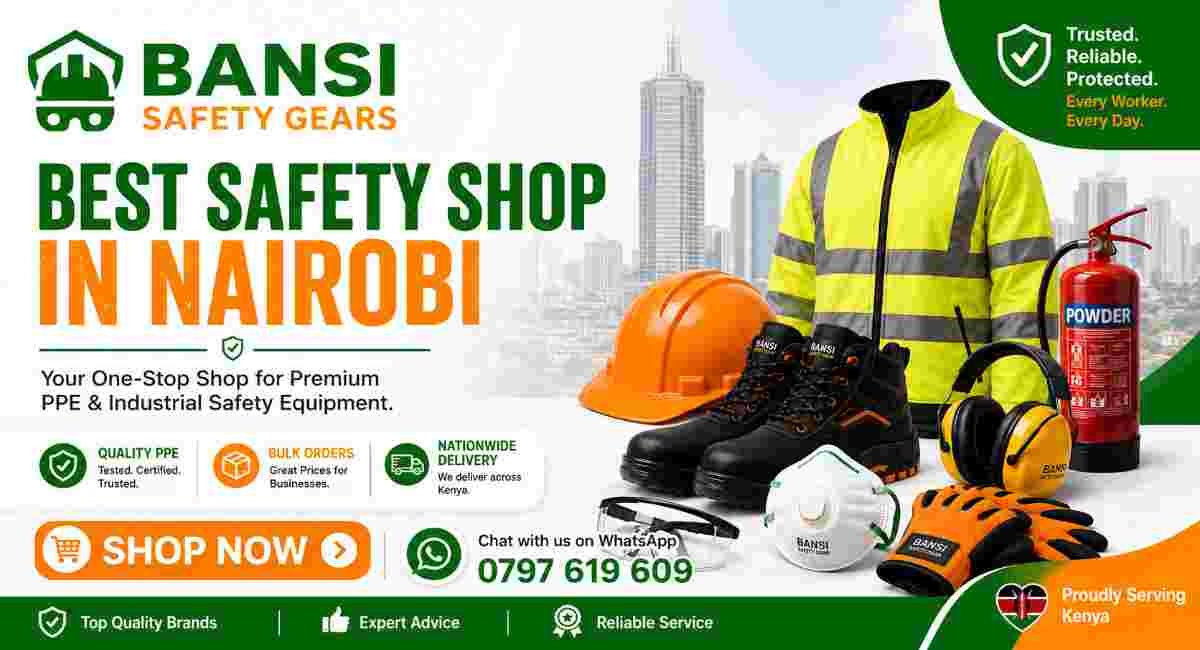
Safety Shop Nairobi – PPE & Safety Equipment for Workplaces
PPE Buying Guide for Nairobi Businesses: 10 Things to Check Before Choosing a Supplier
Buying personal protective equipment for a business involves more than finding the lowest price or choosing products that look durable.
Construction companies, manufacturers, warehouses, workshops, cleaning companies, agricultural businesses and other organisations may require different PPE depending on the hazards workers face and the tasks they perform.
Before selecting a PPE supplier in Nairobi, procurement teams should therefore consider product suitability, specifications, availability, worker fit, quantities and purchasing requirements.
This guide explains 10 important things Nairobi businesses should check before choosing a PPE and safety equipment supplier.
1. Start With the Workplace Hazard
PPE should be selected according to the actual hazard workers are exposed to.
Before requesting prices, identify:
- The task being performed
- The workplace environment
- The type of hazard involved
- How workers may be exposed
- The protection required
- Whether several types of PPE must be worn together
For example, a worker handling materials in a warehouse may require completely different protection from an employee handling chemicals, spraying pesticides or performing work at height.
This is why buying PPE simply because it appears strong or affordable can lead to unsuitable product selection.
A good purchasing process starts with the hazard and then identifies the PPE required for that specific application.
2. Check the Exact Product Specification
Two PPE products may look similar while having very different specifications.
Before comparing quotations, check information such as:
- Manufacturer
- Product model
- Product type
- Size
- Material
- Intended application
- Relevant product standard where applicable
- Packaging
- Other technical specifications required by your organisation
This becomes especially important when purchasing PPE for company use, projects, tenders or structured procurement requirements.
Where an RFQ specifies a particular model, manufacturer or technical requirement, quotations should be compared against that specification rather than simply comparing products by appearance.
3. Match the PPE to the Intended Application
Different PPE categories protect against different workplace risks.
A Nairobi business sourcing safety equipment may require products from several categories, including:
Foot Protection
Depending on the workplace, requirements may include:
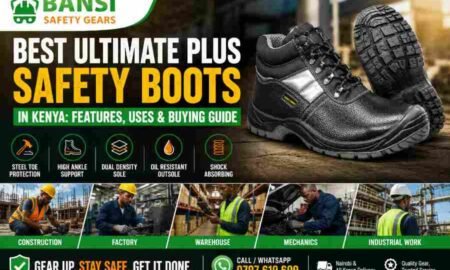
- Safety boots
- Safety shoes
- Steel-toe footwear
- Composite-toe footwear
- Gumboots
- Industrial work footwear
Footwear should be selected according to the working environment and intended application.
Head Protection
Safety helmets may be required in workplaces where employees are exposed to falling objects, overhead hazards or other head-injury risks.
Browse Safety Helmets in Kenya.
Hand Protection
Different workplace tasks require different glove materials and designs.
Applications may include:
- General handling
- Mechanical work
- Construction
- Chemical handling
- Cleaning
- Cutting hazards
- Material handling
Gloves should not be selected on thickness alone. The material and specification should suit the actual task.
Eye & Face Protection
Workplace hazards affecting the eyes and face can include:
- Dust
- Flying particles
- Chemical splash
- Grinding debris
- Cutting operations
- Workshop tasks
- Maintenance work
Depending on the application, suitable protection may include safety glasses, goggles, face shields or welding face protection.
Browse Safety Goggles in Kenya.
Respiratory Protection
Respiratory PPE should be matched to the airborne hazard.
Available products may include:
- Disposable dust masks
- KN95 respirators
- Reusable half-face respirators
- Full-face respirators
- Filters
- Chemical cartridges
A particulate mask should not automatically be selected for gases or chemical vapours. Likewise, filters and cartridges should be compatible with the respirator and intended contaminant.
Explore Respiratory Protection Kenya.
Hearing Protection
Workers exposed to workplace noise may require:
- Ear plugs
- Ear muffs
- Reusable hearing protection
Selection should consider the working environment, duration of exposure, fit and other PPE being worn.
See Ear Protection Kenya.
Protective Clothing
Protective clothing requirements may include:
- Work overalls
- Reflective clothing
- Dust coats
- Protective suits
- Aprons
- Rainwear
- Task-specific protective garments
The correct garment should match the working environment and hazard.
Fall Protection
Working at height may require more than simply purchasing a harness.
A complete fall-protection requirement can involve:
- Full-body harnesses
- Lanyards
- Connectors
- Anchorage systems
- Other fall-arrest equipment
Businesses should therefore consider the complete system required for the specific task.
4. Compare Like-for-Like Products
One of the most common purchasing mistakes is comparing prices without confirming that the products being compared have the same specification.
For example, two quotations for safety footwear may differ because of:
- Brand
- Construction
- Material
- Model
- Size
- Product specification
- Packaging
- Current availability
The same applies to gloves, helmets, respirators, safety glasses, workwear and other PPE.
Before selecting a quotation, confirm exactly what product each supplier is offering.
The lowest figure may not represent the same product or specification as another quotation.
5. Check Stock Availability Before Making Commitments
Website listings do not always mean that every size, model or quantity required for a project is immediately available.
This becomes particularly important when purchasing:
- Large quantities
- Multiple PPE categories
- Different sizes
- Specific brands
- Specific product models
- Equipment required by a fixed date
For urgent requirements or larger orders, confirm availability before relying on an online product listing.
Businesses requesting quotations should also state the quantity and required delivery date so availability can be checked against the actual requirement.
6. Consider Worker Fit and Sizing
PPE purchasing should also account for the people who will use the equipment.
Depending on the product, businesses may need to specify:
- Footwear sizes
- Clothing sizes
- Harness fit
- Glove sizing
- Compatibility with other PPE
This is particularly important when purchasing products for teams rather than individual users.
A procurement list stating only “50 pairs of safety boots” may not provide enough information if those 50 pairs need to be supplied in several sizes.
Providing the size breakdown at quotation stage can make sourcing more accurate.
7. Evaluate the Supplier’s Product Range
Businesses often require more than one PPE category.
A construction company, for example, may require a combination of:
- Safety helmets
- Safety boots
- Reflective jackets
- Gloves
- Safety goggles
- Respirators
- Hearing protection
- Harnesses
- Protective clothing
Explore Construction PPE Kenya.
Warehouses and logistics operations may require footwear, gloves, reflective clothing, eye protection and respiratory protection depending on individual tasks.
Manufacturing businesses may require different combinations of footwear, hearing protection, eye protection, respiratory equipment, gloves, clothing and face protection across different departments.
Agricultural operations may require specialised protection for greenhouse work, pesticide spraying, chemical handling, harvesting, packhouse activities and farm maintenance.
Explore Flower Farm PPE Kenya and Pesticide Spraying PPE Kenya.
A supplier with access to multiple PPE categories can make it easier to consolidate requirements under one quotation.
8. Check Whether the Supplier Can Handle Bulk Requirements
Individual PPE purchases and corporate procurement requirements are not always the same.
For larger purchases, businesses may need to submit:
- Product descriptions
- Quantities
- Required brands or models
- Technical specifications
- Sizes
- Delivery location
- Required delivery date
- RFQ or purchasing reference
A PPE supplier serving businesses should therefore be able to review structured requirements and prepare quotations accordingly.
Bansi Safety Gear supports individual buyers as well as organisations purchasing larger quantities of workplace PPE.
Businesses can Request a PPE Quotation.
9. Consider Delivery and Collection Requirements
Location also matters when purchasing workplace PPE.
A Nairobi organisation may require:
- Delivery to its premises
- Delivery to a project site
- Collection
- Supply to several departments
- Larger quantities delivered according to confirmed arrangements
When requesting a quotation, provide the delivery location and required date so the requirement can be assessed properly.
Bansi Safety Gear supplies PPE and workplace safety equipment to buyers in Nairobi, Ruiru and other parts of Kenya subject to product availability and delivery arrangements.
For buyers who specifically want to browse products and purchase safety equipment serving Nairobi, visit our Safety Shop Nairobi page.
10. Look Beyond Price When Selecting a PPE Supplier
Price is important, but it should not be the only factor used to select PPE.
Businesses should consider:
- Whether the product matches the workplace hazard
- Exact product specifications
- Manufacturer and model where relevant
- Worker fit and sizing
- Quantity required
- Product availability
- Delivery requirements
- Ability to support bulk quotations
- Applicable company or tender requirements
The objective should be to purchase the appropriate PPE for the intended task rather than choosing products purely because they are cheaper.
PPE Requirements by Industry
Different industries require different combinations of PPE.
Construction Companies
Construction requirements may include head protection, safety footwear, reflective clothing, gloves, eye protection, respiratory PPE, hearing protection and fall-protection equipment.
Visit Construction PPE Kenya for a wider construction-focused range.
Manufacturing & Workshops
Manufacturing facilities may require different PPE across individual departments.
Possible requirements include:
- Safety footwear
- Eye protection
- Hearing protection
- Respiratory PPE
- Work gloves
- Protective clothing
- Face protection
PPE should be selected according to the hazard present in each department rather than automatically issuing one standard product to every worker.
Warehousing & Logistics
Warehouse environments may require protection for:
- Material handling
- Loading and unloading
- Forklift areas
- Maintenance
- Dusty storage
- General operations
Typical requirements may include safety footwear, gloves, reflective clothing, eye protection and task-specific respiratory protection.
Cleaning Companies
Cleaning companies may require:
- Rubber gloves
- Chemical-resistant gloves
- Safety footwear
- Eye protection
- Protective clothing
- Respiratory PPE
Where chemicals are involved, selection should consider the product being handled and actual exposure.
Flower Farms & Agriculture
Agricultural operations may require PPE for:
- Greenhouse work
- Harvesting
- Pesticide spraying
- Chemical handling
- Packhouse activities
- Farm maintenance
Explore Flower Farm PPE Kenya for industry-specific guidance.
Retail PPE Purchasing vs Corporate Procurement
It is also useful to distinguish between straightforward PPE purchasing and broader corporate procurement.
Bansi Safety Gear
Bansi Safety Gear is suitable when you want to:
- Browse PPE products
- Compare individual products
- Check current prices
- Buy workplace safety equipment
- Purchase small or medium quantities
- Request larger PPE quotations
Visit the Safety Shop Nairobi page if you are specifically looking for PPE and safety equipment serving Nairobi.
Bansi Suppliers
For wider corporate procurement involving:
- RFQs
- BOQs
- Procurement lists
- Project requirements
- Multi-category sourcing
- Larger corporate supply requirements
visit Bansi Suppliers.
This keeps PPE retail and safety-equipment purchasing distinct from wider structured corporate procurement.
What Information Should You Include in a PPE RFQ?
The clearer your PPE requirement, the easier it is for a supplier to quote accurately.
Where possible, include:
- Product name or description
- Quantity
- Brand or model where required
- Technical specification
- Sizes
- Delivery location
- Required date
- Tender, RFQ or purchasing reference where applicable
For requirements containing several PPE categories, combine the products into one structured list.
You can Request a PPE Quotation from Bansi Safety Gear.
Common PPE Purchasing Mistakes
Businesses can improve PPE procurement by avoiding several common mistakes.
Choosing PPE by Appearance
A product that looks heavy-duty is not automatically suitable for a particular workplace hazard.
Comparing Price Without Comparing Specification
Make sure competing quotations refer to comparable products, brands, models and specifications.
Ignoring Sizes
Footwear, gloves, clothing and other wearable PPE may require a size breakdown.
Assuming All Respirators Provide the Same Protection
Respiratory PPE should be selected according to the airborne hazard and compatible filter or cartridge requirements.
Purchasing a Harness Without Considering the Complete System
Work-at-height protection may also involve lanyards, connectors, anchorage systems and other equipment.
Waiting Until the Last Minute to Confirm Stock
Large quantities, specific models and multiple sizes should be checked before the required delivery date.
Frequently Asked Questions
How should a business choose a PPE supplier in Nairobi?
Start by identifying your workplace hazards and required PPE. Then compare suppliers according to product specifications, availability, sizing, quantities, delivery requirements and ability to support structured quotations.
Should price be the main consideration when buying PPE?
Price is one consideration, but businesses should also compare the exact product specification, suitability for the intended hazard, manufacturer or model where relevant, availability and fit.
Can one PPE supplier provide several safety categories?
Depending on availability, businesses may source several categories including safety footwear, helmets, gloves, respiratory protection, eye protection, hearing protection, workwear and fall-protection products under one requirement.
Can companies request PPE in bulk?
Yes. Companies, contractors and institutions can provide product specifications, quantities, sizes and delivery requirements for quotation.
What details should I provide when requesting a PPE quotation?
Include the product description, quantity, required brand or model where applicable, technical specification, sizes, delivery location and required date.
Do businesses need to provide footwear and clothing sizes?
Where products are size-specific, providing the required size breakdown makes quotation and supply more accurate.
Can several PPE products be included in one RFQ?
Yes. A company can combine safety footwear, helmets, gloves, respiratory PPE, clothing, eye protection, hearing protection and other safety equipment within one quotation request.
Does Bansi Safety Gear serve Nairobi businesses?
Bansi Safety Gear supplies workplace PPE to buyers in Nairobi and other parts of Kenya, subject to product availability and confirmed delivery arrangements.
Where can I browse PPE available for Nairobi buyers?
Visit Safety Shop Nairobi to explore workplace PPE and safety equipment for Nairobi customers.
Ready to Source PPE for Your Business?
A good PPE purchasing process starts with understanding the hazard, defining the specification and providing the supplier with clear quantities, sizes and delivery requirements.
If you are looking for PPE and workplace safety equipment serving Nairobi, visit:
For larger requirements:
Call / WhatsApp: 0797 619 609
Bansi Safety Gear — Gear Up. Stay Safe. Get It Done.


Leave a Reply